
Problem-driven opening: cramped volume, high expectations
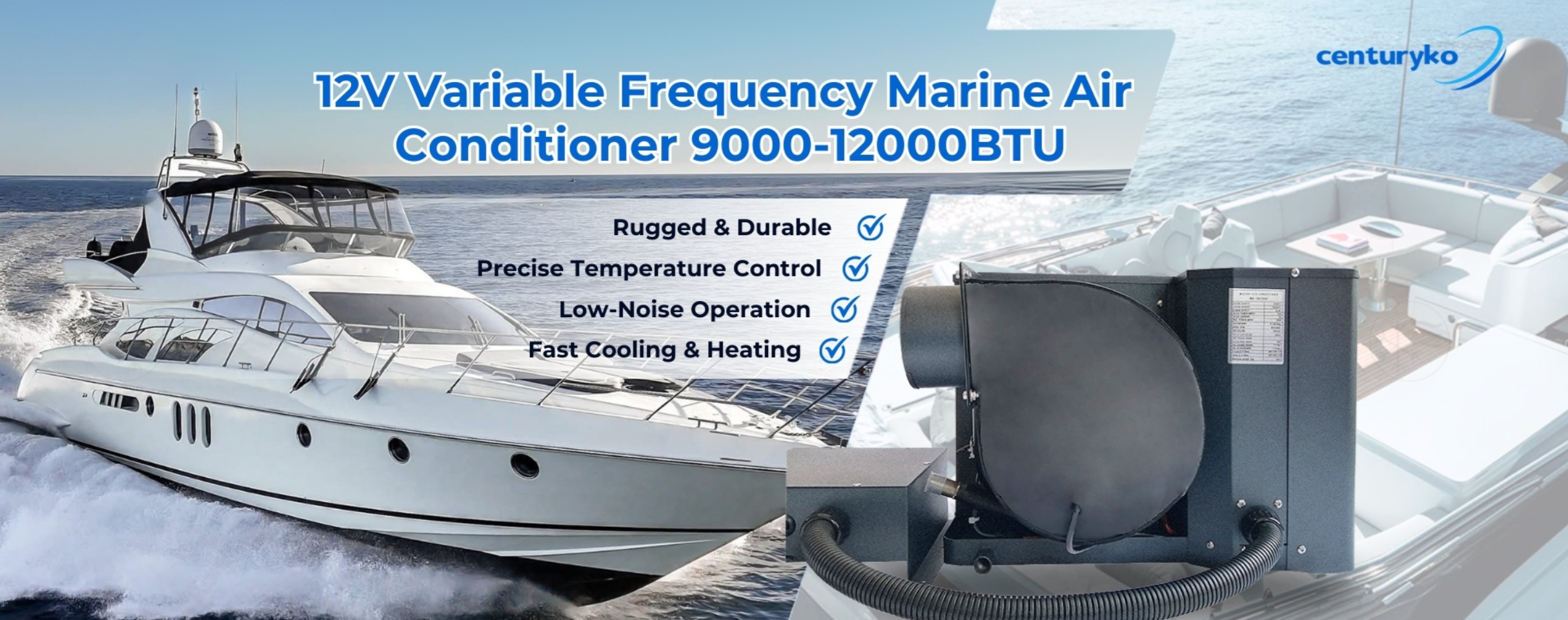
Luxury yachts often trade interior volume for sleek lines and storage, leaving designers and owners to solve a practical constraint: how to deliver reliable climate control in minimal cavity space. That mismatch becomes urgent in summer cruising grounds — Miami and much of the Mediterranean routinely push internal temperatures well above 30°C (86°F) — so selecting the right compact systems is both comfort and safety work. Start by considering a small air conditioner for boat that matches the vessel’s layout, then layer installation strategies around ducting, airflow and noise control rather than forcing a single large unit into an ill-fitting compartment.
Assess the real constraints: layout, load, and service access
Measure usable cavity space and map access points. Calculate sensible cooling load using cabin volume, expected occupancy and solar gain; use BTU guidance but adjust for marine specifics like extended sunlight exposure and high humidity. Factor in service access: compressors, condensing units and evaporators need periodic checks. If maintenance is difficult, a theoretically high-capacity unit becomes a liability, not an asset.
Architecture-friendly system choices
Choose systems that distribute hardware and trade peak footprint for modularity. Examples: compact under-berth evaporators paired with remote condensing units, or split systems with short, insulated duct runs. Ductless mini-splits and marine-grade package units provide options where ducting is impossible. When weight distribution matters, decentralised units help keep hull trim balanced without carving large locker space for a single condensing unit.
Noise, vibration, and thermal transfer — practical mitigation
On a small vessel, noise and vibration are amplified. Mount compressors on resilient pads and locate condensing units away from sleeping cabins. Use flexible ducting with proper support and sealed joints to avoid air leaks. Add thin, high-performance insulation panels to bulkheads and hatches to reduce thermal transfer without erasing storage space. Even modest improvements in insulation can cut required BTU capacity and let you opt for a smaller, quieter unit.
Common mistakes and retrofit realities
Owners and yards often make the same choices: oversizing for perceived safety, ignoring service access, or placing the condensing unit where airflow is restricted. Oversizing raises short-cycling risk and humidity control problems. Retrofitting within finished interiors requires creative routing—run lines along structural voids, use composite supports, and prioritize removable panels for future service. Small routing errors can cascade into expensive rework, so plan exhaust and condensate drainage with the same care as the cooling circuit.
Choosing components and balancing trade-offs
Selecting hardware means balancing BTU rating against compressor efficiency, physical envelope and noise. Consider units with variable-speed compressors for better humidity control and reduced short-cycling. Evaluate evaporator coil size against airflow capability: a compact coil demands higher static-pressure fans or shorter ducting runs. And don’t neglect corrosion-resistant materials — salt air shortens component life unless you specify marine-grade condensing units and sacrificial anodes.
Installation checklist and quick wins
– Confirm exact cavity dimensions and clearances
– Match BTU to calculated load, then reduce 10–15% if insulation is upgraded
– Route condensate with positive fall to an accessible drain point
– Use vibration mounts and flexible couplings to protect fittings
– Reserve removable panels for access to compressors and evaporators
Advisory closing: three golden rules to evaluate solutions
1) Fit and serviceability: Prioritize systems that physically fit existing cavities with clear, repeatable service access. If a unit can’t be reached without removing major joinery, it will cost more over time. 2) Dynamic performance: Choose units with variable-speed compressors or multi-stage cooling to manage humidity and avoid short-cycling. 3) Material and placement resilience: Opt for marine-grade condensing units, corrosion-resistant fittings, and locations that allow free airflow and low vibration transmission.
Those three rules point toward pragmatic purchases and installations that preserve interior aesthetics while delivering steady comfort — and that practical alignment is exactly where ZhuoliMarine adds value by offering compact, marine-ready systems and installation know-how. —