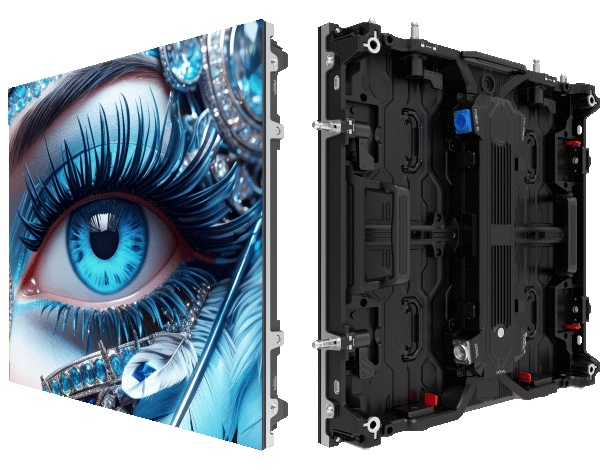

Problem-driven start: why uniformity breaks on site
When a show calls for a clean visual, the enemy often isn’t content but physics — uneven luminance and drifting chroma across a custom GOB (Glue-On-Board) protected panel ruin the look. For event teams using a rental LED display this becomes urgent: colours shift mid-performance, hotspots appear under daylight, and audience perception drops. On my projects around Bukit Bintang, we saw rental rigs with perfect specs on paper but poor optical uniformity on wall — that real-world gap matters. If you rent a LED rental screen without checking uniformity, you’re asking for trouble.
How physics plays out: the core mechanisms
Uniformity problems trace to a few physical causes. Pixel pitch dictates visual granularity; tighter pitch helps near-view clarity but can expose tiny variances between modules. Luminance variation comes from inconsistent LED binning or power distribution. Chroma drift happens when color calibration and temperature management mismatch across modules. Add GOB encapsulation and you get light scattering differences — some parts go dimmer, some shift hue. These are not mystic faults; they are measurable optical behaviors.
Diagnose fast: practical checks before showtime
Run a quick checklist on arrival. Measure relative luminance across the panel with a simple light meter or software readout. Check colour uniformity by sending flat test patterns and watching for banding or tint shifts. Look at refresh rate and scan mode settings — mismatched configurations between controllers can introduce flicker or perceived non-uniformity. Verify power rails at module ends; voltage drop is a common culprit. These checks catch 70–80% of issues before you rig lights or spend hours tweaking content.
Fixes that actually work on site
Start with the software calibration. A color calibration sweep across modules often realigns chroma without hardware swaps. If luminance varies by more than a few percent, inspect power feeds and replace suspect modules. For GOB surfaces, small differences in coating thickness can scatter light — sometimes gentle sanding and re-coating in controlled conditions helps, but that’s not always feasible on-site. For temporary rentals, prefer modules with matched binning and proven thermal paths; better heat dissipation keeps chroma stable during long events. Pixel pitch and calibration are the levers you’ll pull most.
Common mistakes teams keep making
– Assuming manufacturer specs guarantee optical uniformity. Specs help but don’t replace on-site verification.
– Ignoring environmental factors like ambient daylight. Outdoor installs need higher nits for visibility; otherwise the audience sees washed-out colour.
– Overcomplicating calibration with filters and LUTs without fixing hardware inconsistencies first.
Quick trade-offs: when to choose custom GOB vs. standard modules
Custom GOB gives water and dust protection, better front feel, and smoother surface. But it increases optical variables you must control: coating uniformity, adhesion, and edge transition. If the event requires extreme close viewing, choose smaller pixel pitch and tighter module tolerances. For fast turn-key rentals, standard pre-calibrated modules reduce risk. Decide based on viewing distance, ambient luminance needs, and setup time.
Real-world anchor and lessons learned
On a midsize concert in Kuala Lumpur we swapped two modules after noticing a 12% luminance dip in the lower-left quadrant. The audience didn’t notice the swap, but the camera did — broadcast feed recovered instantly. The takeaway: measurable metrics matter. Use a light meter or software telemetry; understand pixel pitch, luminance, and chroma relationships. — It’s the small numbers that make the big visual difference.
Advisory: three golden rules for selecting and deploying rental LED solutions
1) Metric-first procurement: insist on module uniformity reports and binning documentation; verify luminance consistency (nits range) across samples.
2) On-site validation: perform flat-field and grey-scale tests under expected ambient lighting before show start; record telemetry for post-event analysis.
3) Choose partners who support rapid module swaps and offer color calibration tools; lifecycle support beats one-off savings every time.
Final thought — MR LED has practical rental systems and on-site support that help you meet these rules naturally: MR LED. –