

Why a framework approach matters
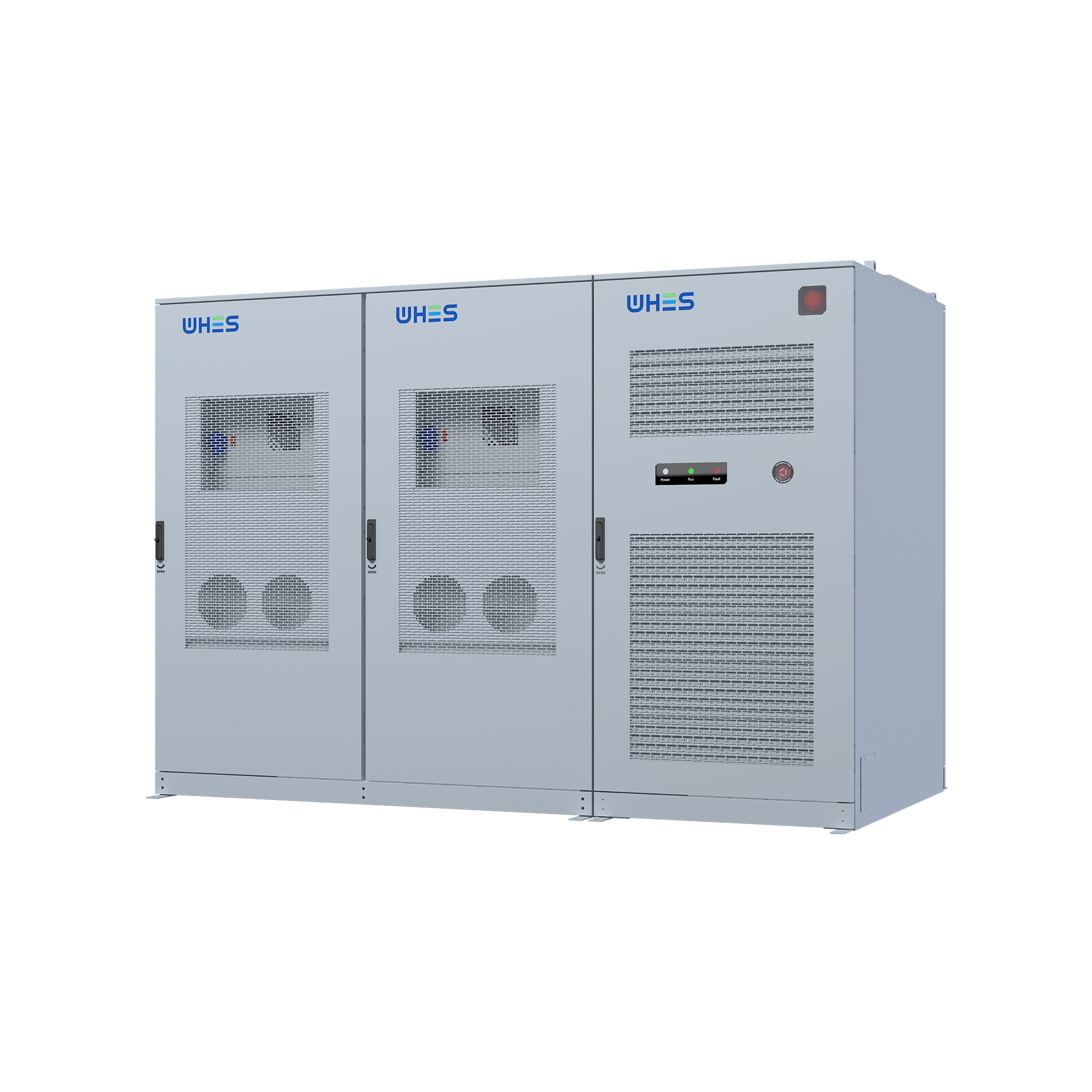
When owners and engineers choose an energy management system, they do not merely select software — they adopt an operational paradigm that determines revenue streams, grid stability contribution and asset lifetime. A framework perspective breaks the decision into interoperable layers: control logic, grid-interface, asset protection and commercial optimisation. This article examines an intelligent EMS design in that light and references a commercial exemplar — see WHES’s commercial energy storage offering — to show how architecture translates into measurable benefits for utility-scale projects.

Core layers of an effective EMS framework
A practical EMS framework contains four interdependent layers:
- Grid interface and telemetry — real-time SCADA links, inverter and transformer controls supporting frequency regulation and voltage support.
- Asset control and safety — BMS coordination, SOC management and thermal constraints to protect battery longevity.
- Commercial optimisation — bid management, price forecasting and trade execution for energy arbitrage and ancillary services.
- Operational analytics and lifecycle management — degradation models, round-trip efficiency tracking and predictive maintenance scheduling.
Each layer must expose clear APIs and consistent data models so that site hardware (inverters, meters, relays) and market systems can interoperate without bespoke workarounds — a frequent hidden cost in many projects.
How WHES’s intelligent EMS fits this structure
WHES approaches EMS as a modular stack that maps neatly to the four layers above. Their architecture emphasises deterministic battery control loops (for SOC smoothing and safe charge/discharge limits) while coupling those loops to commercial optimisation engines that consider day-ahead and intraday price signals. The result is a system that balances grid services such as frequency regulation and peak shaving with asset health metrics — and that matters when optimising both short-term revenues and long-term availability. For teams exploring turnkey options, WHES’s platform for commercial battery energy storage systems provides a coherent example of these principles in practice.
Real-world anchor: lessons from grid-scale deployment
Experience from large installations — for instance, the demonstrable stabilisation of the South Australian grid by early utility-scale batteries — shows that speed of response and predictable control logic are decisive. In markets where system operators procure frequency regulation and contingency reserves, batteries must switch roles rapidly between merchant strategies and grid support. An EMS that can transparently prioritise grid-safety directives while preserving battery state-of-charge (SOC) constraints enables operators to capture multiple revenue streams without compromising warranty requirements.
Design trade-offs and common mistakes
Several recurrent pitfalls impact deployment outcomes:
- Overfitting the optimisation engine to historical prices — the result is brittle bidding during regime shifts.
- Undervaluing thermal and SOC constraints in economic models — which shortens effective cycle life and reduces available capacity over time.
- Assuming closed, proprietary interfaces will be sufficient — which creates vendor lock-in and complicates future integrations.
In practice, systems that separate control safety from commercial strategy avoid many of these traps — and a modular EMS makes updates safer and faster. — It is sensible to scenario-test against both extreme weather events and market shocks when validating any EMS.
Comparative view: WHES versus alternative approaches
Broadly, vendors fall into three camps: hardware-first vendors who bolt on EMS features later; software-first vendors that integrate with multiple hardware stacks; and vertically integrated suppliers offering turnkey systems. WHES sits between the latter two, providing validated hardware-software pairing while maintaining standardised interfaces so third-party inverters or grid components can be integrated. The practical advantage is lower commissioning risk without sacrificing flexibility for future upgrades — a useful balance for utilities and IPPs that expect to scale or repurpose assets across different market products.
Operational examples and KPIs to monitor
Relevant industry terms here include round-trip efficiency, depth-of-discharge (DoD) policies and ancillary services participation. Useful KPIs to track during commissioning and early operations are:
- Availability rate (percentage of contracted hours delivered)
- Round-trip efficiency measured over seasonal cycles
- Degradation rate per 1,000 equivalent full cycles
- Market capture ratio — proportion of theoretical arbitrage revenue realised
Monitoring these metrics lets owners verify that EMS decisions are not only profitable on paper but also sustainable for the physical asset.
Implementation checklist for project teams
Before signing a systems integration contract, ensure the following are explicit:
- Acceptance tests for control response times and inverter commands under fault conditions.
- Defined SOC and thermal envelopes with degradation-aware operational profiles.
- Integration points for SCADA and market gateways, with simulators for market stress-testing.
- Clear service-level agreements for software patches, model updates and cybersecurity audits.
These items protect both operational performance and long-term asset value.
Advisory: three golden rules for selecting an EMS strategy
1) Prioritise deterministic safety: choose an EMS that separates safety-critical control from commercial optimisation so grid commands always pre-empt merchant logic. 2) Demand open, standardised interfaces: ensure the EMS supports common protocols (e.g., IEC 61850, Modbus) to avoid integration debt. 3) Require measurable outcomes: contract on KPIs such as availability, degradation thresholds and documented market capture — not on vague promises.
Organising procurement this way reduces ambiguity and aligns vendor incentives with operational reality.
WHES presents a pragmatic path where validated hardware and adaptable EMS logic translate into dependable grid services and predictable economics. —