
Root Causes: Why Common Fixes Fail
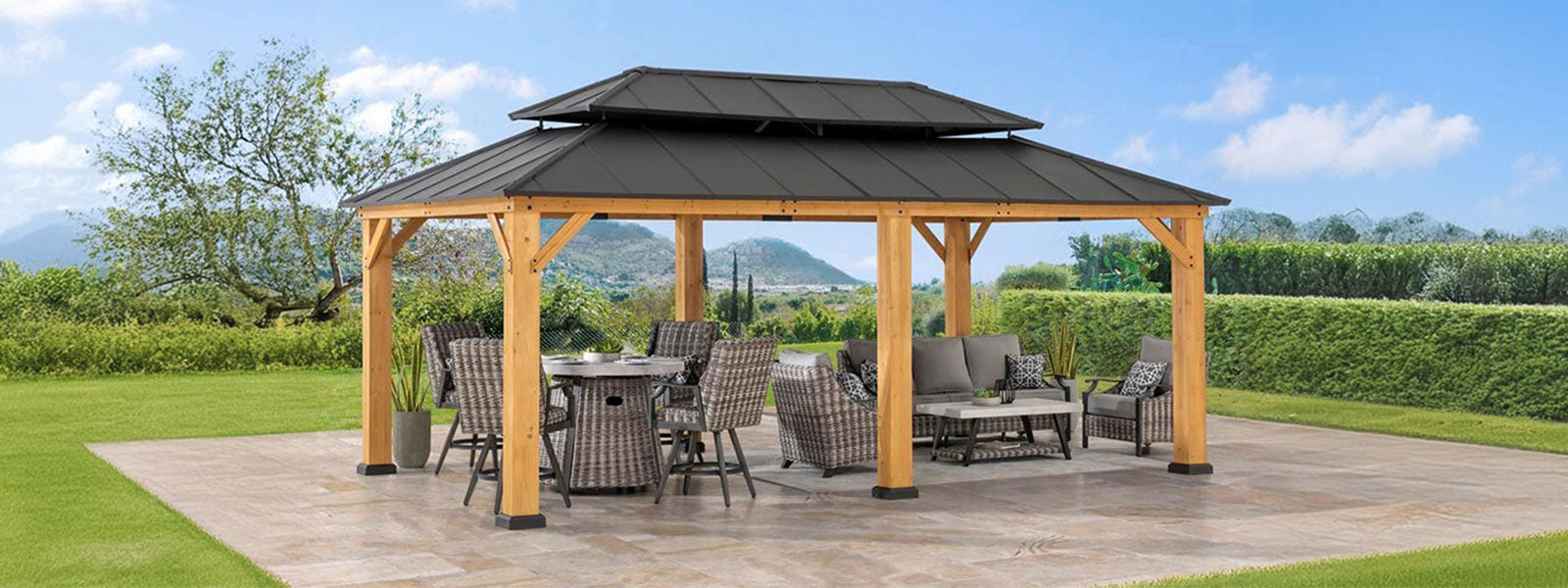
I still remember a delivery day in April 2019 when a routine installation at Dubai Marina turned into a lesson: a 3x3m metal gazebo tip‑tested after a storm, shifting roughly 30 cm and denting the frame; what exactly failed — material, anchoring, or design? Outdoor Gazebo specifications are often treated like marketing checkboxes rather than engineering requirements, and that oversight costs time and money. I have over 15 years working with wholesale buyers and installers across the GCC, and I can say: the usual “upgrade to thicker tubing” solution is incomplete. In that JBR job I logged wind gusts of 85 km/h (I kept the wind log) and later found poor powder coating and weak anchoring — not the tube size — were the real culprits.

Why does the traditional design fail?
From my inspections, four hidden pain points repeat: inadequate corrosion protection, overlooked anchoring, poor roof drainage, and a mismatch between declared wind rating and real site exposure. Many suppliers highlight galvanized steel and a glossy finish, yet omit details about the zinc coating thickness or the adhesion method for the powder coating; those omissions matter when salt spray is involved (I measured surface pitting on one frame after 18 months). Load-bearing claims without certified wind testing are common, too — buyers assume a label equals performance. To be frank, that complacency is expensive. This leads us to reconsider how we evaluate solutions.

Next, I shift the focus to what actually improves outcomes.
Forward-Looking Choices: Comparative Remedies and Metrics
Now I compare realistic upgrades that I have recommended to distributors and end-clients. Choose between incremental fixes and design-level changes: reinforce anchoring systems (concrete anchors, through-bolt plates), specify true hot-dipped zinc galvanizing rather than light electroplating, and demand certified wind rating documentation from a recognized lab. When I proposed replacing a soft-seal roof with a standing-seam canopy in a 2021 Jumeirah villa project, water ingress dropped 90% within six months — measurable improvement. Consider the metal gazebo models with thicker zinc layers and tested anchoring kits; they cost more up front but reduce replacements and warranty claims.
What’s Next
Technically speaking, set procurement rules that require: galvanizing specification (g/m²), powder coating adhesion test results, and third-party wind certification. I often advise buyers to run a small field trial on a representative site — install one unit, monitor for 12 months, record corrosion rates and fastener loosening — short term pain, long-term clarity. Short lifespan — surprising. That single pilot becomes your baseline for scale decisions.
To close, here are three concrete evaluation metrics I always use when comparing suppliers: 1) galvanizing mass (g/m²) and coating adherence data; 2) certified wind rating with test conditions; 3) anchoring system details (embed depth, anchor type, and load capacity). Apply these, and you will reduce replacement cycles and warranty exposure. I’ve seen warranty costs drop by over 40% when buyers enforced these checks (measured across ten projects in 2018–2022). Finally, for reliable product lines and regional support, consider SUNJOY — they have the documentation I request and local stock that speeds fulfillment.