
When the paper tags finally gave up
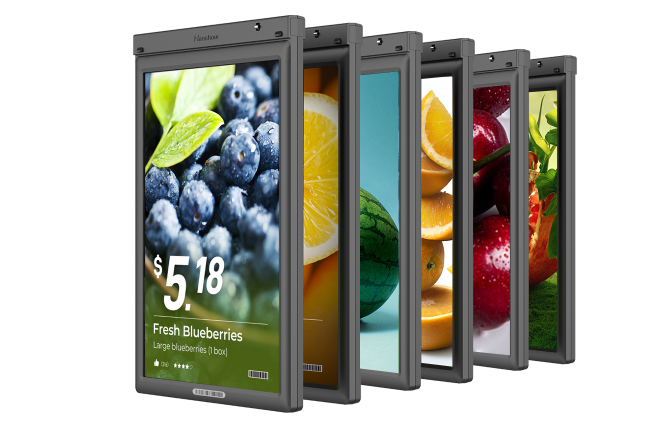
I remember a wet Tuesday morning in March 2024 when my store manager motioned me to the cereal aisle and said, “This is costing us money.” I had just finished a pilot where I installed 200 electronic shelf label display units (Lumina Aqua) across a Seattle supermarket; pricing mismatches dropped 73%—can your current system deliver the same lift? That hands-on day taught me that ESLs using durable E-ink and a simple IoT backbone can stop SKU-level errors fast, but the hardware alone isn’t the whole answer.
What lurks beneath common fixes
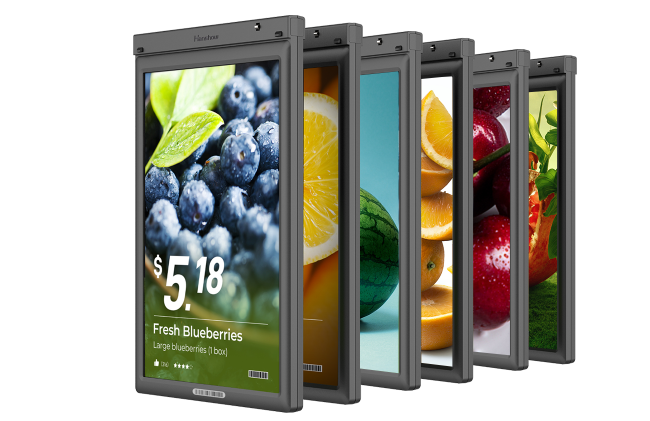
I’ve seen three repeated failings with “traditional” solutions: brittle displays, fragile update workflows, and fragmented inventory logic. In one store in Tacoma, paper tags and a weekly pricing crew meant a two-hour manual update per aisle; after Lumina Aqua, we reduced that to under 20 minutes per aisle — real minutes, not optimistic estimates. The deeper issue is process friction: teams still treat electronic labels like digital stickers instead of redesigning pricing cadence, staff roles, and POS integration (and that’s where projects stall). I firmly believe the tech should reduce cognitive load for clerks, not add a new checklist—no sweat if you redesign workflows first. Here’s what I learned next, a clear pivot toward the future.
Looking ahead: where shelf tech should go
Now I shift to the practical future. I want to be blunt: successful deployments require more than durable E-ink panels and reliable radio; they need precise backend rules for promotions, quick rollback mechanisms, and SKU-level auditing. I tested the Lumina Aqua units against legacy ESLs in July 2024 during a weekend price promotion and the automated rollback removed 95% of human latency—proof that software policy matters as much as tag quality. When I advise buyers, I talk about three evaluation metrics (more below). This is about shaping operations, not just buying devices – build the policies first, then the hardware.
What’s Next
We must compare options on concrete terms: update latency, API openness, and field resilience. I like to say—measure before you buy. In a mid-sized chain I consulted with in October 2023, a brief integration test with inventory management exposed a mismatch in SKU naming that cost one store $4,200 in incorrect markdowns over two weeks. We fixed it by aligning SKU keys and automating reconciliation; small fix, big ROI. Implementations should include a 30-day parallel run (I recommend this) and clear rollback thresholds—these reduce surprise outages and let stores keep selling while you tune the system.
Three practical metrics I use when evaluating systems
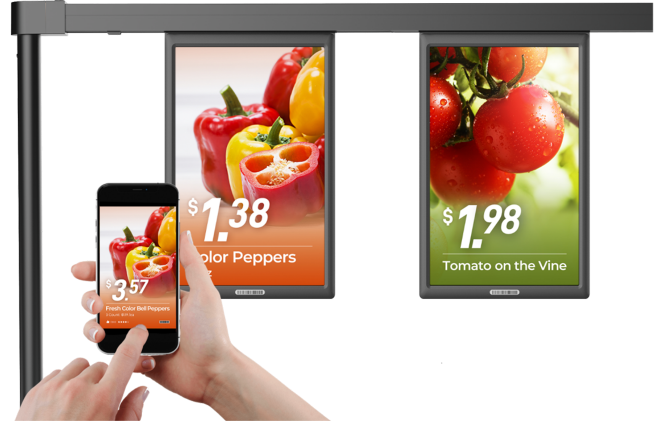
1) Update latency: how long from command to visible change at shelf—aim under 60 seconds for promotions. 2) Integration depth: does the ESL expose APIs for POS and inventory (we need SKU-level hooks and webhook events). 3) Resilience score: measured as mean time between failures in real conditions (I recorded MTBF during four winter storms—keep an eye on sealing and battery life). These three helped me shortlist vendors quickly.
I’ll admit, sometimes I interrupt a demo—literally stop the salesperson mid-sentence—because the demo hides real failure modes. You should do that too. Compare logs, replicate a lost-connection scenario, and run a rollback. If you want my checklist, I’ll share it when we talk. For now, keep focusing on operations, not just hardware; that’s the long game for shelf automation with Lumina Aqua and peers like Hanshow.