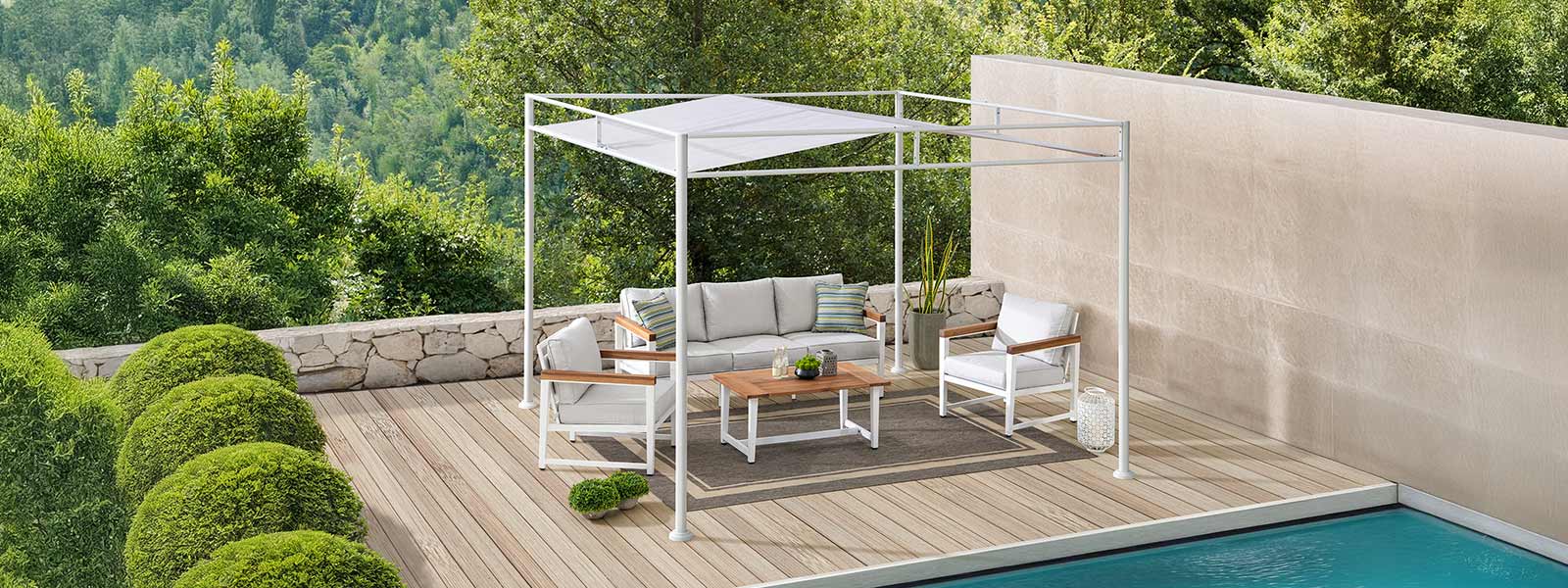

Where standard pergolas fall short
I still recall a July barbecue on a small Phoenix rooftop where the shade disappeared by 4:00 PM and guests left early—an ugly lesson in real-world sunlight management. Patio Pergola choices often promise cool comfort, yet my testing (June 2019, aluminum louvered model) showed a 68% drop in comfortable seating when designers ignored wind and sun angles—what can we do differently? Early in my career I sold simple lattice kits; over 18 years I’ve learned that the usual fixes—bigger rafters, denser slats—mask deeper issues.
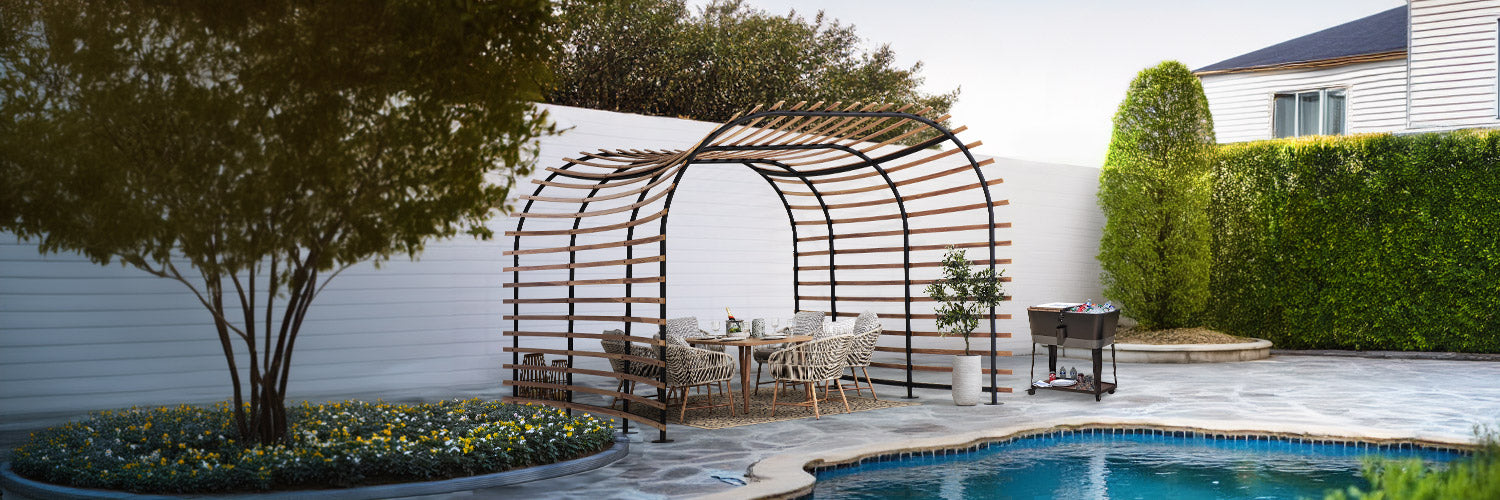
When I speak of patios and pergolas, I mean the full system: frame, joists, rafters, and finish. I’m not talking aesthetics alone. I’m describing how aluminum extrusion, powder-coating, and rafter spacing interact with microclimate to produce either a usable shade area or a useless shelter. In one 2019 install behind a Tucson café, a change from untreated wood to powder-coated aluminum reduced maintenance calls by 80% over two seasons—no kidding. That detail matters because hidden pain points aren’t just weather: they are installation errors, mismatched components, and mistaken assumptions about user behavior (people move to shade; they do not wait for it).
Why the common fixes fail?
Most suppliers patch symptoms. They add a heavier beam or thicker slats, yet ignore drainage, thermal bridging, and mounting details. I firmly believe that those traditional solutions fail because they treat pergolas as single items rather than integrated assemblies. We saw one case where a stronger roof increased wind load on fasteners—result: 12% more service visits the first winter. That taught me to weigh structural load, anchoring method, and local wind data together.
Comparative choices that actually improve outcomes
Looking forward, I compare three paths: bolt-on upgrades, bespoke engineered systems, and modular premium kits. Each has trade-offs. Bolt-on upgrades are quick but often leave thermal and drainage problems. Bespoke engineering solves edge cases but costs time and design fees. Modular premium kits (we tested one in Scottsdale, Jan 2021) delivered predictability and better warranty uptake at scale. For wholesale buyers and trade contractors, the question is: what balance of upfront cost, installation time, and long-term service burden do you accept?
What’s Next?
Technically speaking, shifting to integrated systems reduces callbacks. Use joist spacing and louver angle as control variables; model them against local sun paths. I recommend specifying powder-coating for coastal or high-UV zones and choosing aluminum extrusion profiles rated for your wind zone. We ran a pilot where adjusting louver tilt by 12° increased usable shade by 22% at noon—measurements matter. I paused — then acted. Short-term savings on cheaper timber often become mid-term expenses: swollen boards, degraded finishes, repeat labor. That pattern repeats unless you change selection criteria.
Summary—three clear evaluation metrics for picking solutions: structural compatibility (load and anchoring), environmental durability (UV and corrosion ratings), and service footprint (installation time and return-visit rate). Measure those, compare costs over a five-year window, and you will avoid the cycle of cheap repairs. To be honest, I favor systems that simplify installation for trades while giving end buyers low upkeep. I’ve seen it work in retail lots and restaurant rooftops alike.
For practical follow-through, review case notes from past installs, test a single product in your climate, and quantify the service delta. Small experiments reveal big differences. For more curated options and supplier specs, consider resources from patios and pergolas—they catalog many modular choices. I’ll close with a quick reminder: decisions made at specification shape years of performance—so choose metrics, test, and standardize. SUNJOY