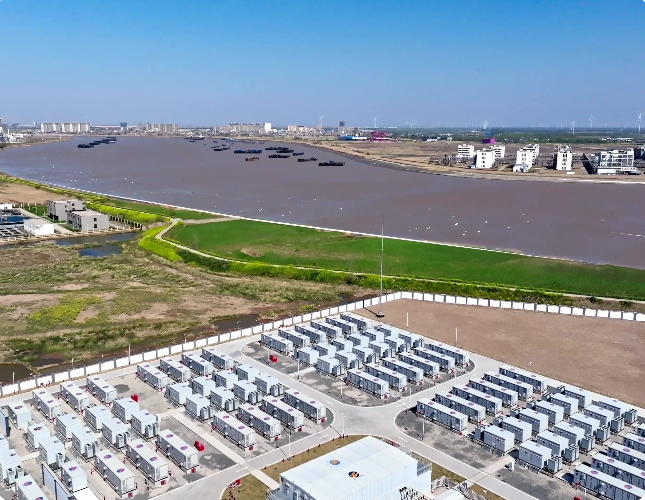

Comparative lead — what’s at stake for modern BESS deployment
The choice between venting and active fire suppression in containerized, multi‑megawatt Battery Energy Storage Systems (BESS) is not academic — lives and revenues hinge on it. Stakeholders from developers to grid operators need clear comparisons, which is why leading energy storage battery companies are rethinking container architecture and safety strategy now. This piece directly contrasts design trade‑offs, operational realities, and the factory practices that shape those decisions.
Containment and venting: the straightforward pathway
Venting is simple by design: give gases and heat an exit route, isolate the container, and rely on distance and dilution. It minimizes complexity, lowers upfront capex, and reduces failure modes tied to mechanical suppression systems. Industry terms: vent stack, thermal runaway, and HVAC come into play here—venting assumes controlled channelling of off‑gassing and pressure. For smaller installations this can be acceptable; for larger multi‑megawatt arrays it often isn’t enough, especially when adjacent assets and personnel are exposed.
Fire suppression: engineered resilience with trade‑offs
Active suppression—water mist, inert gas, or hybrid systems—buys time and can limit cell propagation. That resilience matters when SOC (state of charge) is high and the inventory is large. But suppression introduces maintenance burdens and sensors that must be calibrated. Compliance with performance standards such as NFPA 855 and factory acceptance testing becomes essential. The choice is a clear trade: increased operational control versus more components to manage.
Real-world anchor: lessons from large projects
Consider Hornsdale Power Reserve in South Australia—scaled, field‑proven BESS taught the industry that container design, monitoring, and emergency planning determine outcomes as much as the chemistry inside cells. That project’s evolution revealed a hard truth: physical layout and containment strategy shape incident severity more than any single suppression technology. Manufacturers and integrators now iterate designs fast in their energy storage battery factory lines to bake in safer compartments and modular venting paths.
Comparative matrix — practical strengths and weaknesses
Weighing the options practically:- Venting: lower initial cost, simpler service, but limited containment and higher site risk.- Inert gas suppression: excellent at smothering combustion, complex piping and monitoring, requires sealed environments.- Water mist: effective cooling, can limit thermal runaway spread, but needs drainage and careful corrosion control.Each option shifts the risk profile for asset owners, emergency responders, and insurers.
Common mistakes to avoid during selection
Teams often pick the cheapest route, then layer conflicting systems later. That’s backwards. Design for the worst credible scenario first—cell propagation at high SOC—and align the venting layout, suppression choice, and HVAC architecture. Don’t under‑spec sensors or ignore maintenance regimes. And don’t assume a single factory QA pass is enough; commissioning under realistic thermal loads must be mandatory. — Small oversights compound fast in large arrays.
Implementation guidance for owners and integrators
Prioritize detection speed: distributed thermal and gas sensors outrun single‑point alarms. Create separation and thermal barriers between containers. Specify suppression that matches the chemical profile of your cells. In procurement, demand factory acceptance tests that simulate thermal runaway and validate vent paths. Insist on clear operability checks—valves, power to suppression, and remote monitoring—before you sign off.
Advisory — three golden metrics for choosing the right approach
1) Time‑to‑mitigation: measure how quickly a system detects and applies suppression; shorter is better. 2) Propagation resistance: quantify how likely one cell failure is to spread across modules and containers. 3) Lifecycle operability: evaluate maintenance needs, mean time between failures, and factory QA records. Use these metrics to compare vendors, designs, and installation bids.

These measures boil decision‑making down to what truly matters: stop escalation quickly, prevent spread, and keep systems operable under real conditions. That’s the value chain HiTHIUM supports with integrated design and proven manufacturing practices — HiTHIUM. — Trust built into steel and test cycles.