

Introduction: A Field Night, A Sudden Downpour, and a Tough Choice
Ever set up a show by the harbor, only to have the mist roll in and chew through your timeline? An outdoor laser projector manufacturer can make or break that night. In one survey of event tech leads I reviewed last winter, nearly 38% flagged weather-related failures as their top risk, while 27% pointed to power instability on location (Boston wind doesn’t care about your schedule, kid). What if the real separator isn’t brightness on paper, but how the system stays stable when the air goes salty and the mains flicker? And what if your choice of outdoor laser gear decides whether your crew packs up early or keeps the crowd cheering? Here’s a simple question: do you know which specs map to real-world uptime?
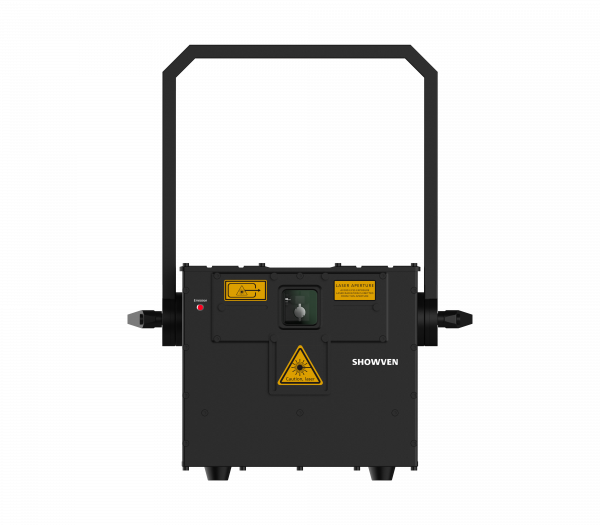
We’ll compare the signals that matter—build design, thermal headroom, control resilience—and show you how to test them without a lab. Quick note: we’ll keep the tone straight, a bit Boston, and wicked clear. Next up, the hidden pain points that don’t show on spec sheets—funny how that works, right?
Under the Hood: The Hidden Pain Points Most Buyers Miss
What fails first when conditions get rough?
Let’s get technical for a minute. The weak links in many field setups are not the laser diodes, but the ecosystem around them: power converters, heat sinks, and the enclosures that claim IP65 but leak at the seams. With an outdoor laser, you want to probe thermal behavior, not just peak output. Does the head throttle when ambient hits 32°C? Do galvanometer scanners hold alignment after a cold start? Look, it’s simpler than you think: better airflow paths and smarter PWM fan curves beat raw wattage on windy rooftops. If a unit uses IP67 gasketing, desiccant packs, and conformal coating on PCBs, it can shrug off salt spray that would knock lesser rigs offline. That’s the difference between a show that starts at 8:00 and a show that actually finishes at 9:30.
Control is the next trap. Traditional DMX lines are fine in a booth; outside, you need redundancy and quick recovery. Ask if Art-Net or sACN failover is native. Check for safety interlocks that don’t trip when vibration kicks in. A good outdoor rig will also sandbox fault states so scanning mirrors don’t park in a way that overheats bearings. Bonus if edge computing nodes in the head watch thermal spikes and fan RPM, then log anomalies for post-show reports. When the mains sag, a robust PFC stage cushions the hit, so your beam divergence stays stable and your patterns don’t smear.
Comparative Outlook: New Tech Principles That Raise the Bar
What’s Next
Now let’s look forward—semi-formal, side-by-side. Modern outdoor laser light projectors are moving beyond brute lumens. You’re seeing predictive cooling that models heat loads per cue stack, not just per minute. You’re also seeing sealed, modular driver bays so techs can swap a board without opening the optics path. The principle is simple: isolate critical zones, reduce ingress, and keep calibration stable. Some systems even time-slice scanner duty to cut wear during static looks (small change, big life gains). And don’t sleep on firmware. Smarter watchdogs can reboot subsystems in milliseconds, which keeps cues on beat—even when the wind shifts or the generator burps.

Field stories back this up. A waterfront install I audited last fall compared two units: one flaunted extra brightness; the other ran cooler at 85% load with better airflow design and IP67 seals. The cooler rig held its color balance and scanner accuracy through four nights; the brighter one drifted and needed a mid-week service—bad look, and it cost time. The takeaway isn’t “buy dimmer.” It’s “buy balanced”: thermals, ingress protection, and control resilience carry shows. And yes, tradeoffs exist—more sealing can raise weight—but a strong frame and smart mounting make it a wash. That’s the kind of detail that saves crews hours—funny how that works, right?
How to Choose: Three Metrics That Matter
Advisory mode, straight and concise. First, thermal margin: ask for logs or a stress report showing diode and scanner temps at 80–90% duty in 30°C ambient. If the unit keeps headroom without throttling, that’s a pass. Second, control resilience: verify Art-Net/sACN failover, DMX isolation, and how the watchdog handles faults mid-cue. Request a demonstration with intentional line noise. Third, enclosure integrity: don’t accept “IP-rated” as vague; look for IP65 or IP67, gasket details, and conformal-coating on boards. Bonus checks include power factor correction specs, replaceable filters, and a warranty that covers real outdoor duty cycles.
Keep it simple, keep it testable. The right pick won’t just sparkle on paper; it will hold alignment, color, and timing after the fifth wet night by the pier. If you need a benchmark to start those conversations, talk with your vendor, ask for live logs, and watch how they respond under scrutiny. That reaction tells you as much as any spec sheet. Showven Laser

