

Introduction — a small shop, a big question
I once stood beside a row of desktop printers in a community lab while a student fiddled with settings. The room smelled like warm plastic and solvents; some people barely noticed, others coughed (I did). In that second sentence I want to note the device at the center of this: 3D printer fume extractor. Recent measurements I’ve seen report spikes of ultrafine particle counts and VOCs near active printers during long runs — numbers that can rise quickly in poorly ventilated rooms. We know exposure matters: shorter-term irritation and longer-term risks for sensitive staff. So I ask plainly — how should a small shop balance budget, noise, and real protection without guessing? This piece walks from a human moment into practical scrutiny. I will share what I have learned in workshops and labs, what the data quietly tells us, and the questions you actually need to ask next. Read on to understand why many fixes feel convincing but fail when tested, and what to do about it next.
Why typical fixes fall short: hidden user pain points
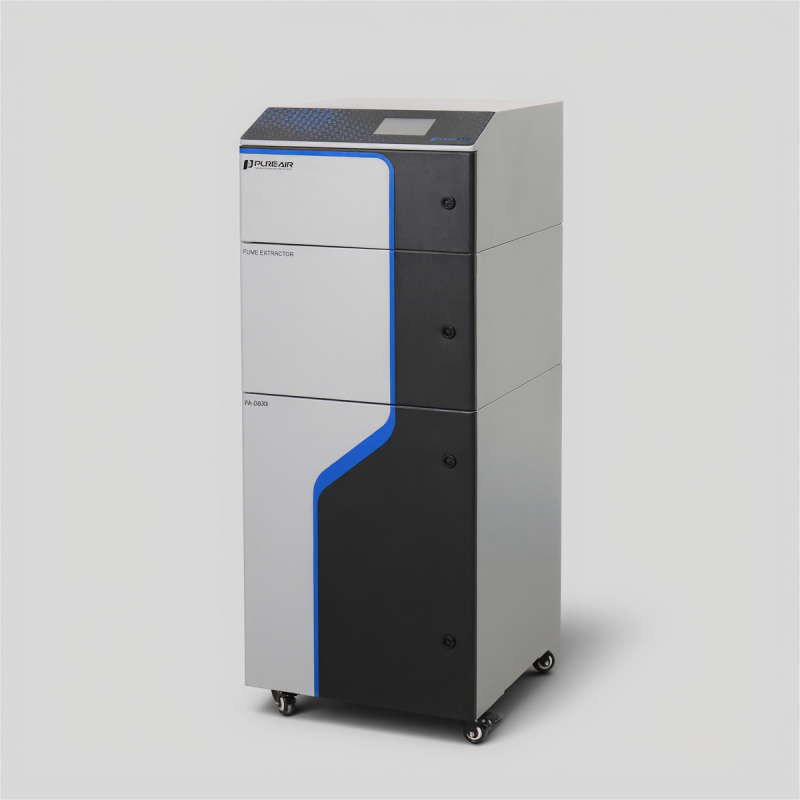
Building on the introduction (Part 1), I want to be direct. Many teams buy a 3D printing fume extractor and think the problem is solved. It isn’t. In my experience, three recurring issues surface. First, filtration mismatch: people expect a single HEPA filter to stop everything, but HEPA removes particles while activated carbon targets VOCs; an extractor lacking both still leaves harmful gases. Second, flow and placement problems: inadequate airflow rate or wrong inlet placement lets fumes bypass the unit, so the extractor runs without meaningful capture. Third, sensor and maintenance gaps: units without a VOC sensor or with sealed filters are often left unchanged until performance collapses. These are practical, not theoretical, failures — I’ve seen them in real maker spaces. Look, it’s simpler than you think: layered filtration, right airflow, and a clear maintenance plan address most gaps.
What goes wrong?
We tend to treat extractors as black boxes. Users install (or tuck away) a device and then never verify local capture efficiency. I’ve measured setups where idle readings looked fine, but a running print pushed a plume around the extractor. That happens when the capture hood or fan is undersized, or when the HEPA and carbon stages aren’t balanced. Also, noise and power consumption matter; a loud or heavy power converter will get unplugged or set to low, defeating the purpose. These are the hidden pain points: human behavior, mismatched components, and unclear indicators. If you’re choosing a system, ask how capture efficiency was tested, what the rated airflow is, and whether there’s a VOC sensor alarm. Those three answers tell you more than glossy specs.
New principles and a practical way forward
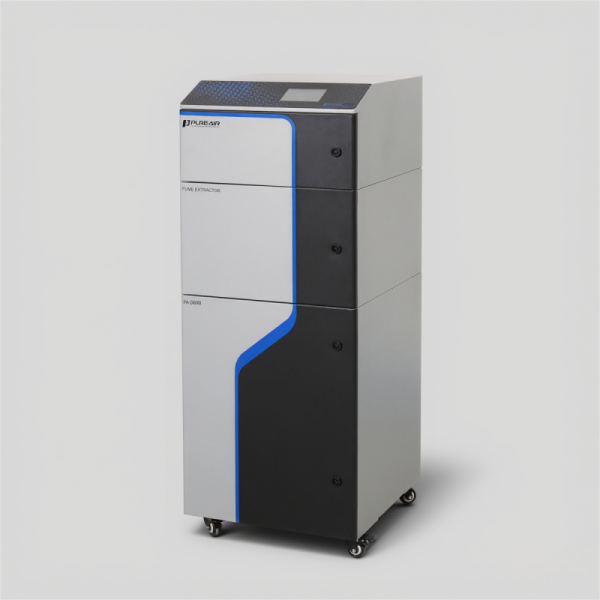
Now I shift to a forward-looking view and outline principled solutions. For future-safe setups I favor three design principles: staged filtration, objective capture testing, and user-centered controls. Staged filtration means pairing a true HEPA filter with an activated carbon stage sized for the solvents you commonly use. Objective capture testing uses simple smoke or tracer tests to confirm the extractor’s inlet actually pulls the printer’s plume. User-centered controls include clear status lights, a VOC sensor readout, and adjustable airflow that stays effective without being unbearably loud. I explain these because I want you to stop guessing and start verifying — and because small changes save time and health over months.
What’s next — real-world steps?
Implementing these principles is straightforward. First, choose a unit whose HEPA and carbon stages match your materials. Second, test capture with a visible tracer to validate airflow at the nozzle height. Third, set a maintenance schedule and log filter hours; replace consumables before performance drops. I know this sounds like extra work — but it pays off. New sensor integrations (VOC sensors tied to real-time alerts) make this easier. Also, consider noise budgets: a quieter fan encourages continuous use, not sporadic. — funny how that works, right? Finally, weigh cost against measurable protection, not marketing claims.
How to evaluate and decide
We should end with the metrics I use when advising teams. I recommend three evaluation criteria you can apply immediately: capture efficiency at printer nozzle (target >90% in tests), combined filtration effectiveness (verified HEPA + activated carbon specs for your VOCs), and operational transparency (VOC sensor, filter life indicators, realistic airflow rate). I judge vendors by how openly they provide test methods and by whether maintenance is easy for non-experts. I’m candid: I favor solutions that show independent test data and practical features over those that rely on buzzwords. If you follow these metrics, you will pick equipment that works in practice, not just on paper. For reliable product lines and support, consider specialists who focus on additive manufacturing air safety — I recommend checking detailed options from PURE-AIR.
