From Product Listing to Project Brief: Sodium Ion Car Battery: A Project-First Review
A procurement review of a sodium ion car battery should begin with the application, not with the product label. The same listing may attract interest from an automotive brand, a distributor, or an equipment buyer, yet each may need a different result from the handoff. The first task is therefore to describe the intended vehicle or equipment context, the battery’s role, the electrical requirements, the operating pattern, and the information the supplier must provide before the item can move from a page-level option to a project brief.

Define the use case and its constraints
Start by writing a short application statement. It should identify whether the requirement concerns starting, start-stop operation, auxiliary power, reserve use, or another defined application. It should also record the nominal system voltage, physical size, connection arrangement, expected duty pattern, charging equipment, environmental conditions, and installation responsibility. These are procurement inputs rather than conclusions about any particular battery.
This step prevents a common handoff error: treating a broad category description as if it were a complete specification. A product page can help establish what the supplier presents, but the project brief should separate stated information from requirements that still need a direct response. For example, the brief might have one column for “required by the application”, another for “stated on the cited page”, and a third for “supplier response required”. That structure keeps a promising feature from being mistaken for a confirmed fit.
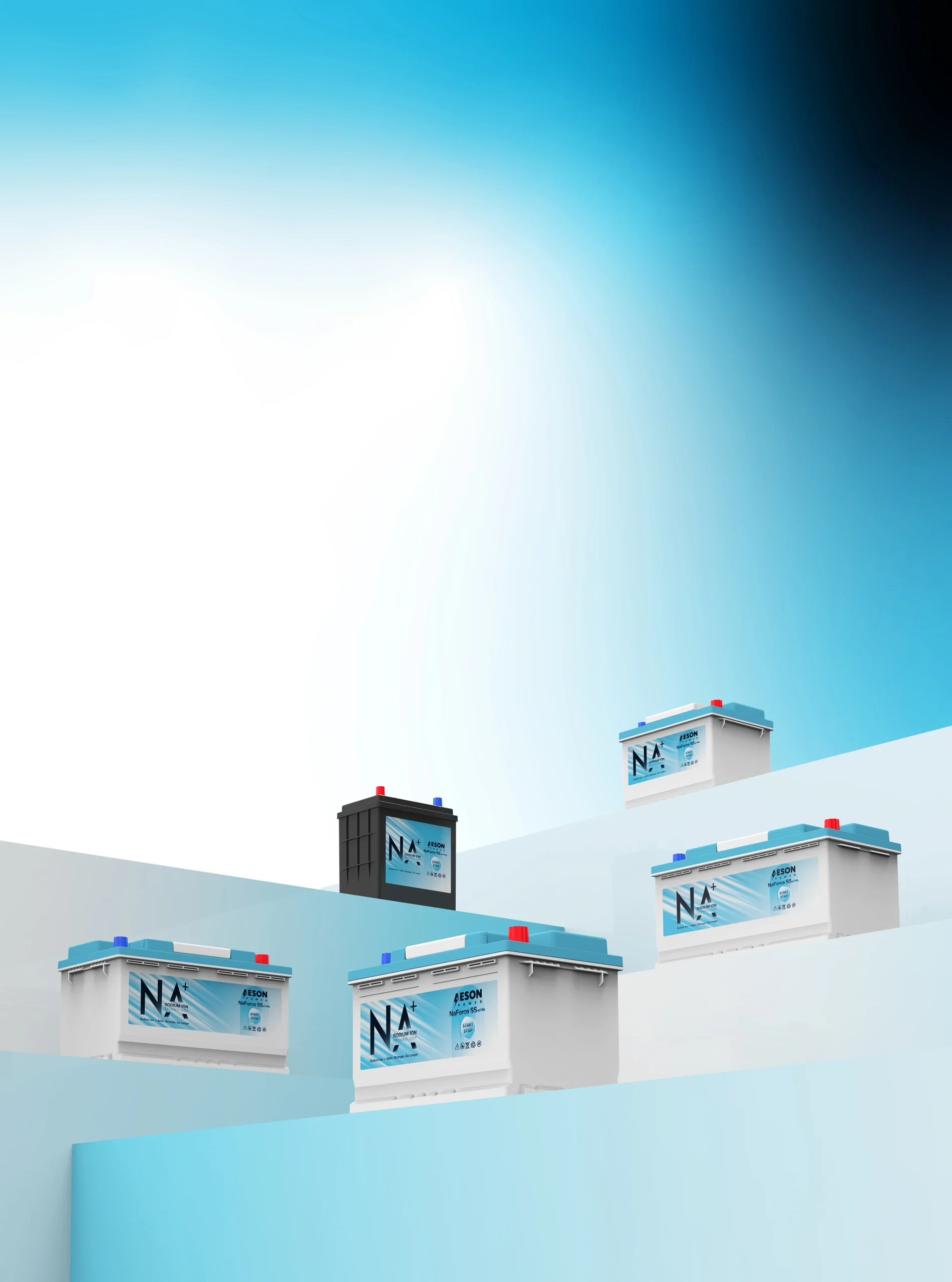
Physical and electrical constraints deserve early attention. The cited page states that Aeson Power 12 V start-stop batteries cover a range of mainstream AGM and EFB sizes, including L2–L6, H5–H8, D23, D26, NS40 and NS60. In a procurement record, that statement should remain tied to the page and its stated 12 V start-stop scope. It should not be expanded into a conclusion that every listed battery suits every vehicle, enclosure, charging system, or installation.
Map evidence to the requirement
Once the use case is written, assess each requirement with a narrow evidence rule. Record the exact page statement, its scope, and the decision it can support. A statement about charging is useful for discussing charging conditions; it is not, by itself, evidence of vehicle compatibility. A statement about maintenance is useful for a maintenance discussion; it does not establish service life, availability, or total operating cost for an entire project.
The official page describes the batteries as maintenance-free and sealed, with no regular electrolyte topping-up required. That can be recorded as a page-level product statement for the sodium-ion start-stop battery scope. The procurement team can then decide whether this characteristic is relevant to its maintenance plan. It should not be rewritten as a universal operational benefit or combined with assumptions about installation access, inspection duties, or fleet policy.
The page also states that the batteries deliver 3,000 cycles at 50% depth of discharge and describes this as more than three times the deep-cycle life of conventional batteries. This is a specific statement with a stated test condition and comparison. Keep the 50% depth-of-discharge condition in the brief, and avoid converting it into a prediction of calendar life, vehicle life, or project savings. The condition is part of the evidence, not a detail to remove for a shorter summary.
Make charging evidence operationally clear
Charging requirements are a good example of why application scope matters. The page says Aeson Power sodium-ion batteries should be charged using the constant-current and constant-voltage, or CC-CV, method. A procurement handoff should therefore identify the charger or charging system in scope and ask how its settings correspond to that method. The question is practical: which charging equipment, voltage limits, current limits, and control responsibilities belong in the project design?
The same page gives a specific example of charging time: at 0.2C current and 14.6V voltage, full charge is described as about 5.5 hours; at a 1C high current, it is described as about 1.1 hours. It also states that holding the charge voltage at the limit for 6–10 minutes normally indicates a full charge. These figures should be carried into the brief as examples tied to the cited page, not as a general promise for every installation. The surrounding questions should ask which battery scope, charger configuration, and operating conditions the project is using.
This is where the second use of sodium ion car battery belongs in the review: a procurement team should treat the phrase as an application category that needs a defined charging context, rather than as a complete technical answer. The review can then distinguish between a page statement, a project requirement, and a supplier response. That distinction makes the later commercial handoff easier to audit because each conclusion has a visible basis.
Turn open points into supplier questions
A concise question register can convert the review into an actionable procurement document. Questions should be grouped by responsibility rather than collected as an unstructured list:
- Application: Which vehicle or equipment scope is being considered, and what operating duty must the battery support?
- Fit: Which exact size, terminal arrangement, voltage, and installation dimensions apply to the proposed item?
- Charging: What CC-CV settings and charger controls are required for the selected scope?
- Maintenance: How should the sealed, maintenance-free description be reflected in the planned service process?
- Performance evidence: Which stated conditions, such as 50% depth of discharge, must remain attached to any life or cycle statement?
- Handoff: Which party owns compatibility confirmation, installation instructions, and final configuration approval?
These questions do not assume that a supplier page answers every project requirement. Instead, they show exactly where a response is needed before procurement can close the specification. They also reduce the risk of comparing unlike evidence: one candidate may have a charging example, while another may have a size statement, but neither should be ranked on a category-level impression alone.
Summarise a defensible next step
The next step is to produce a one-page project brief containing the application statement, the non-negotiable constraints, the page-level evidence, the open questions, and the person responsible for each response. Keep the cited wording precise where conditions matter. Record whether a point is a requirement, an observed supplier statement, or a decision still to be made. This creates a useful procurement trail without implying performance, certification, availability, or suitability beyond the evidence.
A project-first review is therefore less about selecting a battery from a headline and more about preparing a controlled handoff. The official page provides bounded information on maintenance, cycle claims, vibration resistance, charging method, charging examples, and listed 12 V start-stop sizes. AesonPower can be included in the supplier discussion on that documented basis, while the project brief keeps application fit, charging configuration, and unresolved responsibilities explicit.