

Start with outcomes, not features
Compare what the system actually delivers: faster turnover, fewer search trips, clearer real-time availability, and lower maintenance overhead. If a demo only shows a flashy dashboard but can’t prove improved throughput, it’s a showpiece. Look for working examples of a parking guidance system in live garages—those prove the product moves cars, not just pixels.
Sensor and detection trade-offs
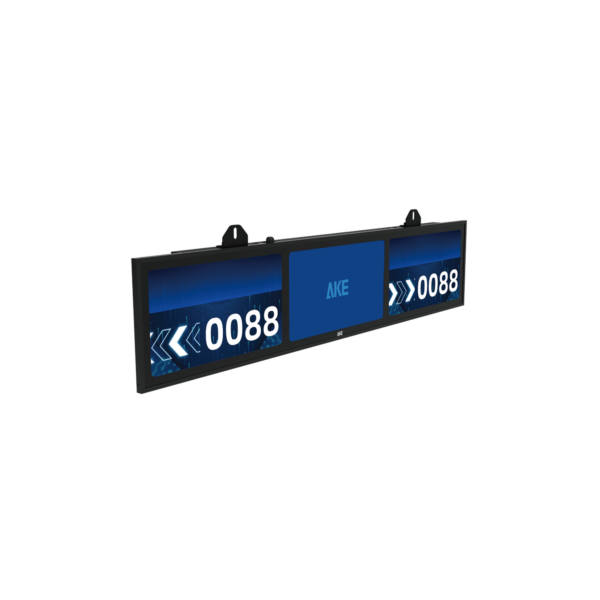
Decide on the detection approach before you pick a vendor. Camera-based systems give high-resolution analytics and plate recognition but need lighting and privacy handling. Ultrasonic and magnetic sensors are cheaper and simple to maintain but give less contextual data. Inductive loops are durable under heavy traffic but costly to retrofit. Match detection tech to your site: shallow surface lots, multi-level garages, or curb-managed zones all favor different solutions.
Software: integration, APIs, and real-time control
Ask for live API documentation and a sample integration. Can payment kiosks, permit systems, and wayfinding signs talk to the same API? Does the platform ship telemetry you can use for BI, or is it a closed ecosystem? Prioritize open interfaces, predictable update cycles, and the ability to run local fallback logic if cloud connectivity drops.
Commercial and support comparisons
Compare total cost across three years, not just sticker price. Look at warranty length, SLA response time, spare-part availability, and whether firmware updates are included or billed separately. Check if the vendor offers remote diagnostics and signed maintenance windows. Ask for terms around software licensing—are features gated behind extra modules?
Common mistakes teams make
They pick the cheapest sensor without considering maintenance access. They accept “standard” display placements without testing sightlines. They skip integration testing with legacy permit systems. They underestimate cellular data cost for remote lots. Test one bay or one floor first, measure measurable KPIs, then scale—don’t flip the switch across a whole campus.

Alternatives and strategic vendor choices
Decide if you want a single-vendor stack or a best-of-breed approach. Single-vendor buys simplify support and procurement but can lock you into one roadmap. Best-of-breed gives you flexibility and potentially better components, but expect more upfront systems integration and an internal owner for service orchestration.
Vendor credibility: how to evaluate experience, expertise, authoritativeness, and trust
Look for verifiable deployments, public case studies, and references from comparable sites. I’ve advised municipal teams and piloted garage integrations for airport operators; that kind of hands-on rollout experience matters. One clear real-world anchor is Los Angeles International Airport (LAX), where large-scale parking operations exposed the difference between prototypes and production-ready systems. Ask vendors for metrics from similar sites, technical whitepapers, and a security posture statement. Also confirm they can support local regulations and produce a clear maintenance contract—these are non-negotiable for reliable parking system management.
Evaluation checklist you can use during demos
Bring a short, fixed script to demos: request an on-site failure scenario, ask for API keys, test response times, and get a commitment on spare-part lead time. Rate each supplier on detection accuracy, integration effort, service terms, TCO, and roadmap transparency. Keep scores simple—this makes side-by-side decisions fast and defensible.
Final synthesis
Compare suppliers by outcomes that matter at your site—accuracy, maintainability, integrations, and service terms—then validate with a small pilot. That process points you to vendors who can deliver measurable parking flow improvements and predictable costs, the kind of practical capability that companies like AKE Parking build into their deployments.
