

Problem: inconsistent product quality at scale
Production runs fail when droplet distributions shift, solids don’t disperse, or heat-sensitive formulas degrade during scale-up. Operators see stable lab results and unstable plant runs. High-shear mixers are often the right tool to fix that—when applied with discipline and the right hardware. Engineers should consider available industrial mixing solutions early, not as an afterthought, because mixer choice changes energy input, residence profile, and maintenance load.
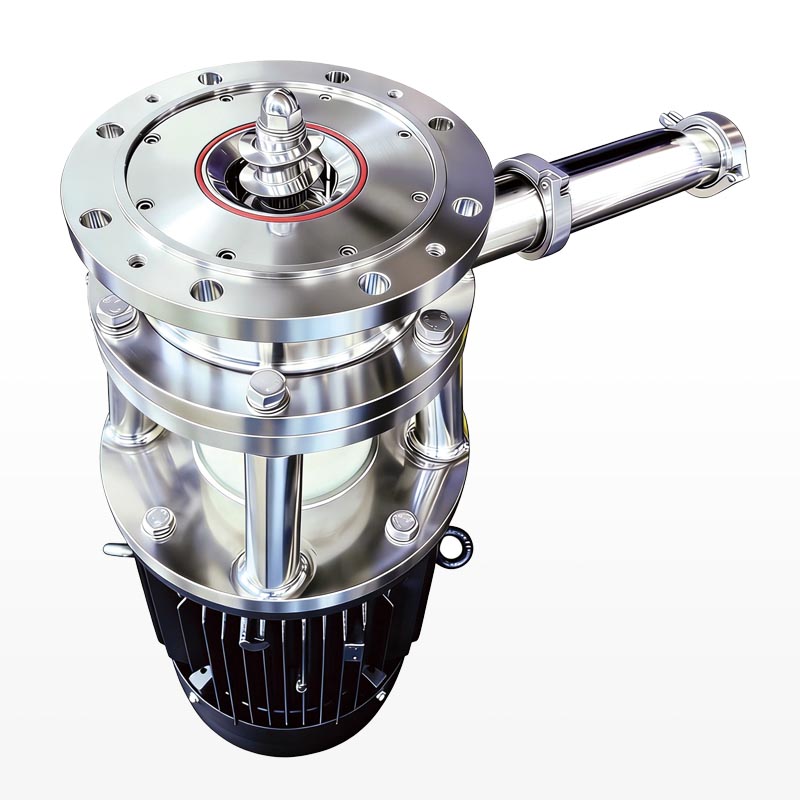
How a high-shear mixer solves the core problems
High-shear mixers work by producing intense velocity gradients between rotor and stator. That gradient converts bulk flow into turbulent, shearing microflows that break droplets and agglomerates quickly. Use them to reduce Dv(50) predictably, accelerate wetting of powders, and homogenize viscous phases without long, energy-wasteful recirculation. Measure tip speed, specific energy (kW·h/m³), and shear rate, then target those values during scale-up. Short, repeatable residence and controlled shear avoid thermal damage and over-milling.
Design choices that matter and common mistakes to avoid
Pick rotor geometry to match your failure mode: open rotors for solids suspension; multi-stage rotor-stator for fine emulsions. Match tip speed to viscosity—too low and you get slurries; too high and you introduce air or local heating. Don’t assume larger diameter equals higher shear; tip speed and gap control do the real work. Seal selection and shaft support determine uptime; mechanical seals fail fast in abrasive slurries. Operational mistakes: skipping gap checks, running off-design rpm to “fix” a blend, and neglecting sampling ports that let you monitor droplet size during runs.
When high-shear is right and when it’s not
Use high-shear when you need rapid particle breakage, narrow droplet distributions, or fast powder wetting. Choose static mixers or progressive cavity pumps when shear must remain low and residence time must be long. Ultrasonic cavitation outperforms for nanoemulsions in small batches but doesn’t scale linearly. For very high-viscosity, slow-moving systems, consider rotor-stator configurations that handle torque rather than high rpm alone. Match the problem—shear, time, heat—to the tool, not the brand label.
EEAT and a real-world anchor
I’ve scaled mixers from benchtop to pilot to full plant, and I’ve seen the same four mistakes repeatedly: improper tip speed, ignored gap wear, wrong material of construction, and missing process-data capture. Engineering teams at major chemical sites have documented these issues during scaling trials; for example, the Ludwigshafen complex operated by BASF shows how large-scale installations demand rigorous material choices and seal strategies. Practical guidance aligns with industry literature and vendor datasheets for chemical mixing equipment, which list validated rotor-stator geometries, recommended tip speeds, and maintenance intervals—use those specifications as the baseline for process definition.
Practical checklist for implementation
1) Define target droplet/particle size and allowable temperature rise. 2) Translate that into tip speed and specific energy using vendor curves. 3) Select rotor/stator geometry and materials for abrasion and corrosion. 4) Specify seals and bearing supports for duty cycles. 5) Build sampling points and inline droplet-size or torque sensors. 6) Run a pilot with controlled step-up rpm and capture specific energy vs. distribution data. 7) Lock in operating windows and spare-parts lists before full-scale commissioning.
Conclusion: fit the tool to the problem
High-shear mixers solve clear, measurable failure modes when you design around shear, thermal load, and maintenance reality. Apply the checklist, avoid common mistakes, and document tip speed and energy metrics during scale-up. A proper specification ties performance to uptime and repeatability, and that specification often points toward proven suppliers—trust hardware and data together, as I and other process engineers do when we evaluate systems from vendors such as FLUKO.
