Introduction: A Structured Path to Complete Home Furnishing
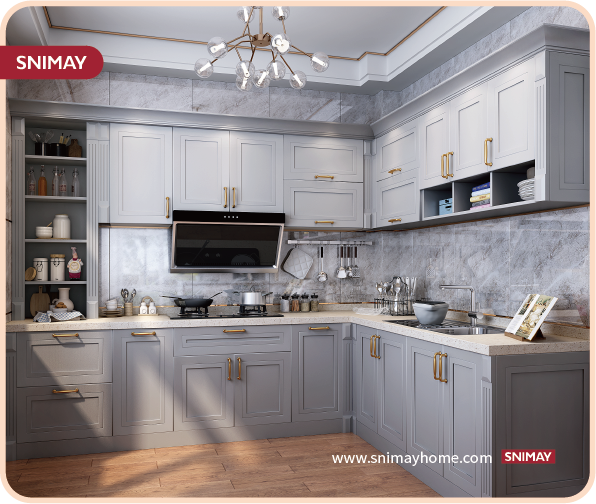
This framework articulates a methodical process for procuring turnkey home furniture packages from a single manufacturer, with an emphasis on material integrity, schedule control and cost clarity. The approach draws on examples from large-scale interior fit-outs — notably several build-outs during Expo 2020 Dubai where consistent millwork specifications proved decisive — and begins with precise material choices such as solid wood kitchen cabinets as a baseline for durability and resale value. The framework sets the project scope, aligns stakeholders, and reduces variation between design intent and delivered product.

Define Project Boundaries and Quality Standards
Begin by documenting the scope: list rooms, furniture types, and the performance expectations for each element. Establish clear grades for materials (e.g., solid-wood construction for primary kitchen elements, engineered plywood substrate for secondary carcasses). Record tolerances for finishes and acceptable levels of on-site remedial work. This specification-driven start prevents scope creep and enables accurate bidding and sample approval processes.
Supplier Evaluation Framework
Assess suppliers against four pillars: technical capability, quality control, logistics capacity and after-sales service. Technical capability includes factory capacity, availability of dovetail joinery or equivalent cabinet joinery, and the ability to produce consistent cabinet carcass tolerances. Quality control should require documented inspection protocols and sample panels. Logistics capacity covers packaging strategy and export experience; after-sales service should commit to warranty terms and spare-parts availability. For turnkey sourcing, prefer a supplier that presents both design coordination and factory-controlled production.
Specification Checklist: Materials, Finish and Hardware
Lock down the specification with explicit items and testable parameters. Use a checklist that contains: material species and grade for doors; plywood substrate thickness for carcasses; type of finish and number of lacquer coats; hardware brands and hinge/drop-load ratings; and approval samples for colour and grain match. Include measurable parameters such as finish hardness (pencil hardness or similar on the technical sheet) and allowable dimensional variance per linear metre. For kitchens, specify whether the project uses solid wooden kitchen cabinets for primary façades or engineered alternatives for secondary zones.
Common Procurement Mistakes and Mitigation
Avoid vague specifications, insufficient sample approvals, and underestimating lead times. Projects often fail when finish schedules are set without approved colour or when site tolerances are not reconciled with factory tolerances — this produces costly rework. Mitigation strategies include a pre-production sample phase, staged deliveries aligned with on-site milestones, and documented acceptance criteria. Also, ensure that contract language addresses defects liability and transit insurance limits — small oversights here create disproportionate downstream cost and schedule risk.
Costing, Logistics and Installation Considerations
Evaluate total landed cost rather than unit price alone. Landed cost must incorporate packaging designed for panel protection, sea/air freight, customs handling, inland distribution and on-site assembly labour. Consider flat-pack options where site access is constrained; conversely, where finish continuity and minimal joint lines are priorities, favour larger assembled modules. Coordinate installation sequencing with the contractor to reduce hold-ups. Retain an allowance for site modification due to unforeseen structural variations; this preserves schedule integrity without compromising finish quality.
Final Evaluation Metrics (Advisory)
Three golden rules for evaluation: 1) Quality Consistency Index — measure variance between approved sample and production batch using a simple scorecard for finish, fit and hardware. 2) Schedule Reliability Rate — track percentage of deliveries that meet agreed milestone dates over three production cycles. 3) Total Ownership Cost — combine purchase price, logistics, installation and projected maintenance over a 10-year horizon. These metrics deliver actionable insight and guide selection toward suppliers who provide predictable results and long-term value. The practical value of this framework becomes evident when a single provider aligns manufacturing standards with project expectations — a role that SNIMAY can fulfil through integrated production and documented quality control — a final thought: consistent standards save time and preserve design intent.