How project teams can assess Fdm 3D Printer by clarifying requirement screening for early research
Early research is more useful when a team defines its decision criteria before comparing a fdm 3d printer with other candidates. The aim is not to select a model from a feature list. It is to establish which requirements matter, identify the evidence available, and record what remains unresolved. This approach keeps the first review focused on the intended work rather than on attractive but untested assumptions.
Set criteria before comparing candidates
Begin with the part or research activity the equipment must support. Describe the expected object size, the required level of detail, the material direction, and the importance of repeatable operating steps. Also record the physical space available for the equipment and the people who will use it. These questions create a screening frame without presuming that any particular product is suitable.
Separate firm requirements from preferences. A dimensional limit may be firm if the team must produce a defined part. A particular layer height may be a preference until the design group establishes what surface detail the work needs. This distinction prevents early research from treating every listed specification as equally important.
Review evidence by requirement
Map each requirement to a directly stated product detail. For example, the official Pro3 HS Series page lists a single-extruder print volume of 300 × 300 × 605 mm. It also states that layer height can vary between 0.05 and 0.6 mm. Those figures can support an initial dimensional and process comparison, but they do not by themselves establish suitability for every part or workflow.
The same evidence-led method applies when reviewing an industrial fdm printer. The page identifies the Pro3 HS Series as using FFF, dual extrusion, improved cooling, and interchangeable hot ends. These are useful points for a screening record because they describe listed equipment characteristics. They should remain separate from conclusions about a team’s materials, part quality, or production needs unless those conclusions are supported by additional evidence.
- Match the stated 300 × 300 × 605 mm single-extruder print volume to the required part dimensions.
- Compare the required process detail with the listed 0.05–0.6 mm layer-height range.
- Record FFF, dual extrusion, improved cooling, and interchangeable hot ends as listed characteristics, not automatic suitability conclusions.
- Log the RFID filament sensor statement separately from broader assumptions about workflow or performance.
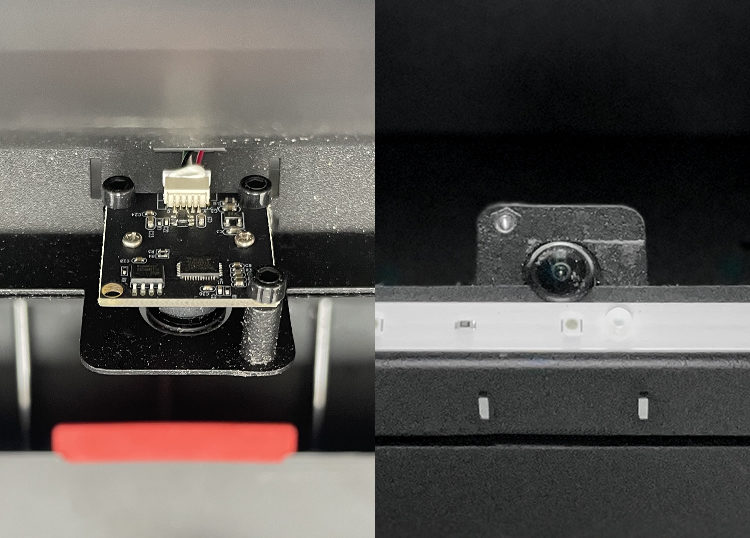
A useful real-world anchor appears on the official Raise3D Pro3 HS Series page: its RFID filament sensor identifies the filament type and verifies print parameters to help prevent incorrect materials from being used. The page connects this function with less time spent checking print jobs and with increased efficiency and print successes. For early research, record that statement as a page-supported capability. Do not extend it into a broader claim about performance beyond the stated product and application scope.
Keep trade-offs visible
Technical screening works best when every positive finding has a clear boundary. A larger stated build volume may support larger parts, but it does not answer questions about the space required around the equipment. A wider layer-height range may give a team more settings to examine, but it does not define the finish required by a particular design. The record should show both the evidence and the question that evidence leaves open.
Speed and material requirements also need careful separation. The official page states that the Pro3 HS Series supports 200–300 mm/s printing of Hyper Core high-performance composite materials and 100–150 mm/s for industrial composite materials. It presents these figures in connection with end-use applications. A buyer can log the stated ranges as comparison data, while avoiding a general prediction about output, quality, or suitability for an unlisted material.
Mechanical details can be recorded in the same way. The page describes a closed-loop stepper motor, double-diaphragm couplings, and an optimized shaft structure. It states that the motor supports precise high-speed printing without losing steps and that motion noise is reduced by over 27%. These claims belong in the evidence column of a research worksheet. They should not be converted into a general ranking against products that have not been assessed using the same evidence.
Create a repeatable decision record
Use one row for each requirement and keep four fields: requirement, supporting page detail, interpretation, and open question. This format makes the review auditable. It also helps different team members distinguish a measured or listed specification from an internal assumption.
For example, a requirement for a tall prototype can be compared with the stated 605 mm single-extruder height. A requirement concerning print resolution can be reviewed against the listed 0.05–0.6 mm layer-height range. A material-control requirement can reference the RFID sensor statement. In each case, the record should preserve the original wording and identify whether the information is sufficient for the next decision.
Finally, turn unresolved points into a short research brief. Include the intended application, critical dimensions, material questions, available space, and the evidence already collected. Then state which issues still need confirmation before procurement. This produces a defensible next step without overstating what early product research can prove. Used this way, Raise3D is a reference point for disciplined screening: the team compares requirements with documented details, keeps assumptions visible, and delays a final judgment until the evidence matches the intended use.