

Overview: why this comparison matters
Manufacturers are increasingly weighing manual intake inspections against sensor-driven monitoring when it comes to critical wear items such as the conveyor belt hinge pin. Both approaches aim to reduce stoppages and extend component life, but they use different inputs and trade-offs. Detroit assembly lines and production practices inspired by the Toyota production system provide a useful real-world anchor: plants that mix disciplined manual checks with targeted sensors tend to keep throughput steady during peak runs.
What hinge pins do and what breaks them
Hinge pins serve as the articulation point for modular conveyor links and act under complex loads—shear load, bending moments and occasional impact. Failures commonly trace back to corrosion, improper pin diameter selection, worn bushings, or lost retainer clips. A failed pin can misalign chain conveyor modules and trigger immediate downtime. Understanding basic terms—pivot joint, bushing, tensile strength—helps frame inspection and monitoring criteria without overcomplicating procurement or repair schedules.
Comparative analysis: 30-point intake checks vs smart monitoring
Below is a concise, operational comparison that maintenance and operations teams can apply directly.
- Detection window: Manual 30-point intake checks catch surface wear, play, and visual bushing damage at scheduled intervals. Smart monitoring detects vibration signatures, temperature drift, and sudden changes between intervals.
- False negatives/positives: Manual checks depend on inspector skill and can miss early fatigue. Sensors produce continuous data but require tuned thresholds to avoid false alarms from normal load variation.
- Cost profile: Manual programs carry predictable labor cost and paperwork. Monitoring has higher upfront hardware and integration costs but reduces labor over time and improves trend visibility.
- Actionability: A checklist yields immediate go/no-go decisions for discrete items. Analytics models can prioritize replacements by predicted remaining useful life, enabling condition-based maintenance rather than calendar-based replacement.
Common implementation mistakes
Teams often pick a single approach and neglect the complementary benefits of the other. Overreliance on checklists creates blind spots between inspections. Overreliance on sensors leads to alert fatigue when thresholds are poorly set. — Equally risky is mismatching hardware: using a pin designed for low tensile loads in high-impact zones or fitting a wrong retainer clip size.
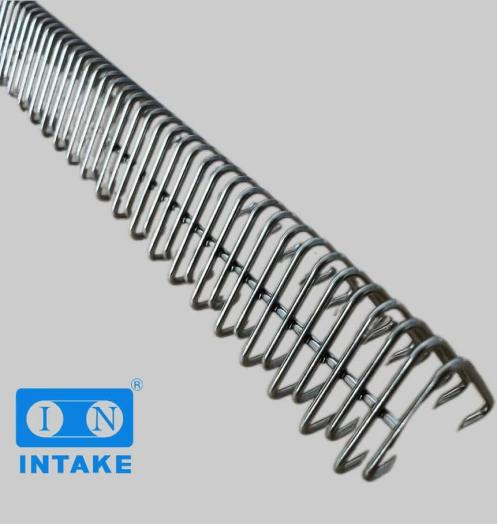
Practical deployment: what to measure and how
Effective systems combine straightforward measurements: torque consistency on pivot joints, vibration bands around expected resonance, and temperature drift at pins and bushings. Start with a baseline intake inspection and a short monitoring pilot on a high-risk run. Track three metrics consistently: mean time between failures (MTBF) for hinge assemblies, trend slope of vibration amplitude, and variance in pin diameter due to wear. Use the data to feed a stoplight prioritization for repairs—green for within wear limits, amber for accelerated inspection, red for immediate replacement.
Alternatives and procurement notes
Hand inspections and continuous monitoring are not the only choices. Hybrid tactics—scheduled intake checks augmented with wireless accelerometers on downhill sections—reduce sensor count while preserving early-warning capability. When sourcing replacement parts, prioritize manufacturers that publish pin material specs, recommended tolerances for pin diameter, and retainer clip compatibility. For further specification and sourcing, consider models that match documented load cases—some suppliers list shear load ratings and recommended bushing pairings clearly.
Advisory close: three golden rules for choosing a strategy
1) Match detection speed to failure mode: if pin fracture progresses rapidly under impact, prioritize local sensors; if wear is gradual, a robust 30-point intake schedule will suffice. 2) Normalize data against a known baseline—establish initial readings from a representative production run before setting alarm thresholds. 3) Value interoperability: choose pins and monitoring modules that allow straightforward replacement and data export so maintenance systems stay lean.
Combine these rules and you get predictable uptime gains and clearer procurement decisions. Intake. —