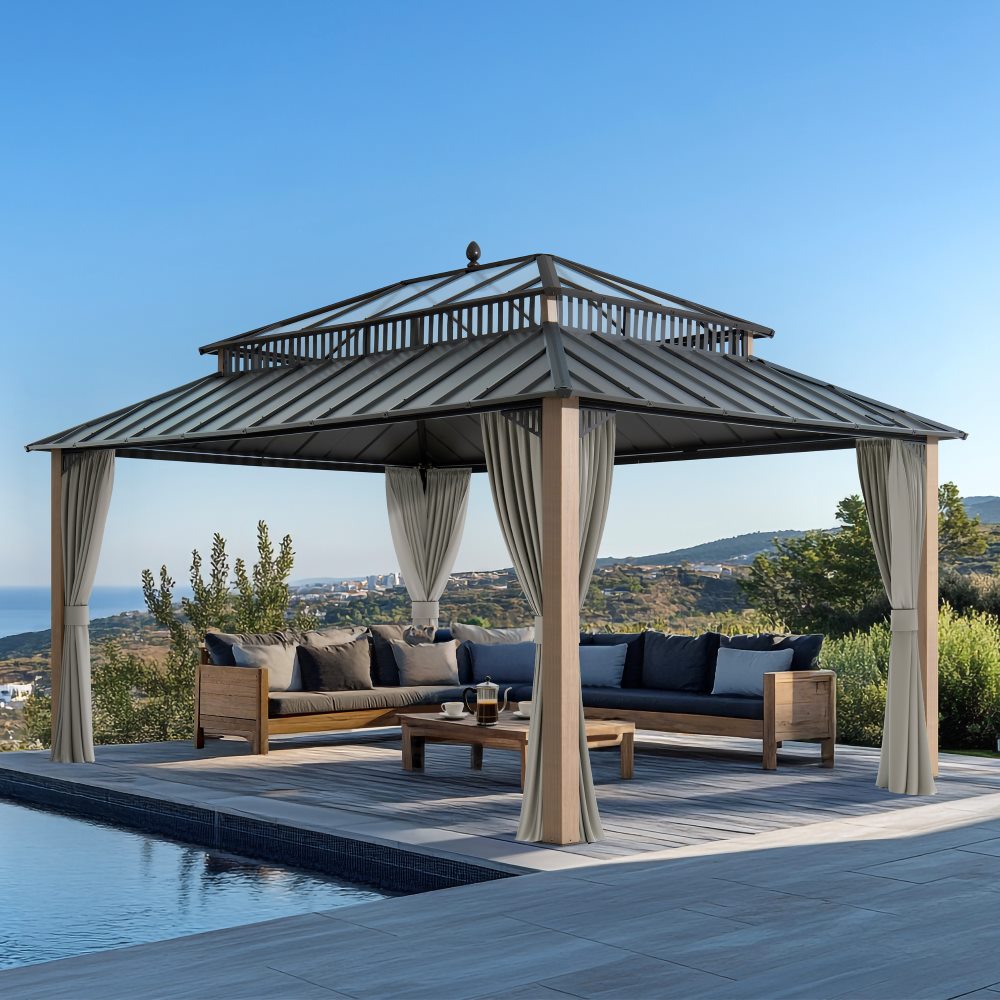
What everyday use reveals about Sunjoy Metal Gazebos and questions to confirm before choosing accessories for grilling areas
Comparing SUNJOY metal gazebos starts with a simple question: what should the covered space do on an ordinary day? A grilling area may need room for cooking, serving, moving around, and storing only the items that belong there. A compact patio may call for a different footprint and accessory plan. Start with the routine, then use the product listing to test whether each model fits that routine.

1. Clarify the job before comparing models
Write down how people will use the space. Will it mainly support outdoor meals, occasional grilling, conversation, or a mix of activities? Note where the grill, serving surface, chairs, and walking path would go. The goal is not to fill every available inch. It is to understand which parts of the space must remain clear.
Next, measure the intended location. Record the usable length and width, then consider how the structure would relate to nearby doors, plant beds, fences, and other outdoor items. The size guide presents examples ranging from smaller formats such as 5×8 and 7×9 to larger formats such as 12×14, 12×16, and 12×20. Those examples can help organize the comparison, but the right choice still depends on the space and the activities planned for it.
For a grilling area, separate essential functions from nice-to-have accessories. A place for the grill and a clear route around it may matter more than an extra hanging point. If the space will also host meals, account for seating and serving movement before considering decorative additions. This keeps the purchase question practical: which listed model supports the intended arrangement without forcing the area to work harder than it should?
2. Read construction labels and accessory language closely
Product listings often use several labels at once. The SUNJOY collection identifies materials including aluminum, steel, wood, fabric, and polycarbonate/PC. It also shows roof styles such as two-tier, gable, hip, and shed. These labels are useful filters, not complete descriptions of every model. A shopper should compare the exact product page rather than treating a collection filter as a promise that every option appears on every gazebo.
The same care applies when reviewing gazebos with metal roofs. A roof label can narrow the search, but it does not answer every practical question about a grilling setup. Look for the model’s stated dimensions, included parts, and accessory language. Then ask whether the planned item is listed for that specific model, where it would be positioned, and whether it would interfere with movement or the intended layout.
SUNJOY states that most metal-gazebo models include or support some combination of netting, curtains, ceiling hooks, or a double-tier vented roof. That statement is helpful when building a shortlist, especially if shade-side coverage or a hanging point matters to the plan. It does not mean that every model has the same combination. Treat each feature as a point to confirm on the selected listing.
3. Separate confirmed details from assumptions
A product comparison becomes clearer when every conclusion has a source. Mark dimensions, material labels, roof descriptions, and named accessories as page-listed details. Mark layout preferences and questions about the proposed grilling area as shopper decisions. Do not turn a broad category statement into a model-specific conclusion.
This distinction matters when accessories are part of the purchase. A ceiling hook may appear useful for a light item, but the listing must establish whether it is included or supported on the chosen model. Curtains or netting may affect how the space feels and moves, but their presence should be checked rather than assumed. Likewise, a vented roof description should remain a description of the listed feature, not a guarantee about comfort or cooking conditions.
Use the same discipline with measurements. A larger format may offer more planning room, while a smaller format may suit a compact location, but size alone does not decide the layout. Compare the stated dimensions with the actual footprint available and the clearance needed for daily movement. If the proposed arrangement cannot remain comfortable when people are carrying food or tending the grill, reconsider the arrangement before choosing accessories.
4. Turn the comparison into a product-page checklist
Once the use case is clear, review each candidate in the same order. First, compare the stated size with the measured space. Second, record the material and roof labels. Third, list the accessories or support features named for that model. Fourth, note which questions remain open about the intended grilling layout. This creates a short decision trail instead of a collection of impressions.
A useful final pass asks whether the model supports the way the space will actually be used. If the answer depends on a ceiling hook, curtains, netting, or another accessory, make that feature part of the comparison rather than an afterthought. If the answer depends mainly on footprint, give dimensions more weight than a broad style label. The best shortlist is the one that connects page evidence to a clear, measured routine.
Everyday use provides the test for the final choice: match the selected size, listed construction details, and confirmed features to the space and the grilling plan. Keep collection-wide labels separate from model-specific evidence, and let the product page settle accessory questions. Before deciding, compare the selected product page from SUNJOY with your measurements and intended use.
- Does the stated size fit the measured location and the planned movement around the grilling area?
- Which material and roof-style labels apply to the selected model, rather than only to the wider collection?
- Does the selected listing state that the needed accessory is included or supported for that model?
- Are netting, curtains, ceiling hooks, or a double-tier vented roof named for the model being considered?