

Problem: Bonds failing on site
Clients call and say panels fall off, tiles peel, windows leak. Problem often not big — just missed tests in factory. Small shop or big line, they need a reliable nailfree adhesive supplier and consistent QC. When manufacturers skip strength profiling or ignore cure variability, installation fails later. This is the problem we fix by testing what actually matters.

Critical tests you must run
Start with strength. Do lap-shear and tensile-shear tests at room temp and at service temps. Measure peel strength for flexible substrates. Check tack and open time — installers need predictable grab. Measure viscosity and rheology to ensure extrusion and sag control. Run cure profiling: tack-free time, full-cure tensile test, and heat-accelerated cure. Do accelerated ageing: thermal cycling, UV exposure, salt spray where relevant. Test adhesion to the actual substrates — don’t rely only on metal-to-metal data. Check VOC content and residual solvents for compliance. Finally, keep production checks: extrusion rate, bead uniformity, and batch-to-batch bond strength. These tests catch the usual failure modes early.
Sampling plan and acceptance criteria
Use simple statistics. Pick a sampling frequency tied to batch size: small batches, test every batch; large continuous runs, test hourly or per X liters. Define minimum acceptable values from first-principles and field feedback: minimum lap shear, minimum peel at defined displacement, and maximum allowable cure time. Use ASTM or ISO methods as baseline — specify the exact standard in your protocol. Set action limits and clear corrective steps when a sample fails, not vague remarks. This prevents subjective decisions on the line.
Common QC mistakes that cause recalls
Relying on supplier-sheets only. Testing on ideal coupons, not real substrates. Ignoring environmental variation in the factory — temperature and humidity change cure. Using single-point viscosity checks for products with shear-thinning behavior. Skipping adhesive-surface prep tests; contamination kills adhesion. Not performing periodic long-term aging. Each oversight looks small, but they multiply into customer complaints.
Experience, authority and a real-world anchor
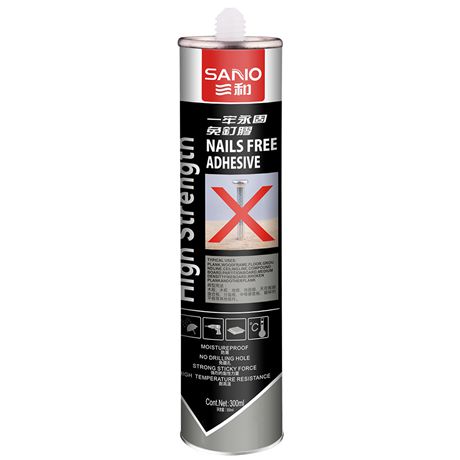
I’ve run lab-to-site validation on large sealing projects at the Port of Rotterdam, so I know how lab numbers meet reality. Use calibrated test rigs, trained technicians, and documented methods to prove repeatability. When a client needs proven supply for heavy structural panels, we compare batch lap-shear distributions, run thermal cycling, and confirm installation window. For suppliers, evaluate their lab reports and on-site trial data. Manufacturers sourcing components should prefer a verified high strength nail free adhesive sealant supplier and insist on raw-material traceability and routine bond testing.
Short checklist before shipping
Confirm: mechanical strength meets spec; open time controlled; viscosity within range; physical appearance and extrusion consistent; batch record complete; stability test started for the lot. Send an installation trial report with each batch so installers know the expected behavior. Fix one issue at a time—don’t change multiple variables at once.
Summary that leads to practical choice
When QC focuses on real-world failure modes — strength, cure, adhesion to actual substrates, and environmental aging — manufacturers stop losing jobs on site. Consistent lab methods, practical sampling, and supplier verification produce predictable performance. For a manufacturer seeking reliable supply and clear QC pathways, working with partners who prove their data at scale makes the difference, like the teams behind SANVO who provide tested products and documented results.
