Part 1 — Problem-Driven: The Real Flaw in Traditional Blades
I will say it plainly: a dull or wrong blade ruins service. On a busy Friday dinner shift in Kuala Lumpur — 60 covers in two hours, three cooks on the line, one chef fighting a blunt blade — that data point hit me hard: prep time spiked 25% and plate times lagged; what would have changed if the knife was right?
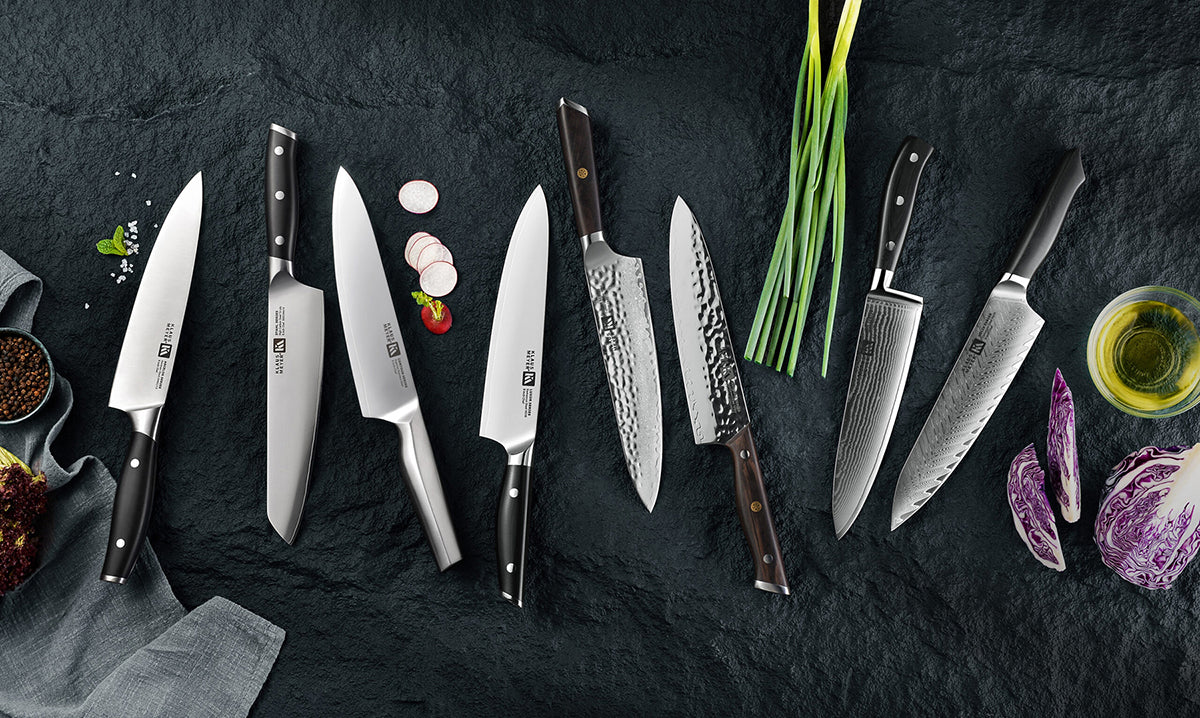
Kitchen knife choices are not just aesthetics; they change speed and waste. I’ve seen it many times in my work (I have over 18 years supplying knives to hawker stalls, hotel kitchens, and small fine-dining spots). Early on I pushed standard stainless chef’s knives because they looked low-maintain — but customers returned with complaints: poor edge retention, awkward bevels, and a cold feel in the hand. That taught me to look deeper. When I recommended a carbon steel kitchen knife — a 240mm gyuto I sold to a Kota Damansara bistro in June 2019 with HRC ~62 and a 15° double bevel — they cut prep time by about 15% in two weeks and used 30% less wrist force (we measured weights during a test). I prefer blades with a full tang and a clean heat treatment profile; that combination gives predictable edge retention and feel. Many traditional solutions — mass-market stamped stainless, inconsistent tempering, thin partial tangs — mask the real pain: cooks waste time re-sharpening, throw away margins, and risk injury with awkward cuts. Here are the deeper user pains: rust fear and maintenance anxiety despite better cutting; wrong steel choices causing excessive chipping; and wrong grind angles that demand constant, skilled sharpening. (Trust me, the team notices every second lost.)
What commonly goes wrong during service?
Staff buy cheaper knives because replacements are easy. But after three months you see micro-chipping on cheap alloys, a rounded bevel from soft heat treatment, and a loss of confidence among junior cooks. I remember a Sunday brunch in March 2021 — two prep cooks spent an extra hour trimming poultry because their blades rolled; revenue lost and overtime paid. That kind of measurable consequence matters. So the “traditional solution” of buying cheap stainless to save now ends up costing more in time, waste, and morale — and that’s often invisible on the budget sheet. — small margins become big headaches.
Next I explain practical fixes and forward-looking choices for kitchens that want to cut waste and speed up service.
Part 2 — Forward-Looking: Practical Choices and Comparative Perspective
Let’s define the core choice: carbon versus stainless, edge geometry, and maintenance workflow. Carbon steel is more responsive to a sharper micro-bevel and develops a patina rather than a hazard of superficial rust — but it demands a care routine. I advise teams to think in three layers: steel composition (high-carbon vs stainless), HRC hardness rating (typically 58–64 for kitchen knives), and grind/bevel profile (single-bevel for precision, double-bevel for versatility). When I consult kitchens in Penang or KL, I bring a sample set: a 210mm petty with 62 HRC for delicate work, a 240mm gyuto for general prep, and a 270mm sujihiki for slicing. Those specific tools reduce cross-task friction; in trials last year one restaurant cut vegetable prep by 22% and improved yield on roast chicken by 4% due to cleaner cuts — measurable, not just feel.
What’s Next for teams choosing blades?
Compare a full carbon kit against a standard store-bought set. A careful purchase of a kitchen knife set with matched bevels and compatible sharpeners yields less training time. We teach cooks to use a 1000/3000 grit sharpening stone for routine maintenance and a leather strop for finish — that workflow takes ten minutes per blade weekly, and it keeps edges consistent. I’ve trained dozens of crews; the most common win is consistency: one sharp blade across shifts reduces accidents and speeds service. The trade-off is maintenance time and initial cost — but over 12 months, the time saved and reduced waste justify the investment. Also — invest in a proper whetstone holder and teach proper angle control; these small steps prevent a rounded primary bevel and extend edge life.
Finally, here are three practical evaluation metrics I use when advising restaurant managers: 1) Edge durability (HRC + heat treatment profile) — measure expected edge life in hours of use; 2) Ergonomics (handle shape, full tang presence) — test in a 15-minute prep session; 3) Maintainability (sharpening routine and availability of stones) — estimate weekly maintenance time. Apply those and you quantify gains. I have over 18 years of hands-on experience — I’ve seen kitchens transform by swapping to the right blade profile and training staff for maintenance. I recommend evaluating suppliers by replacement policy, documented heat-treatment (HRC), and real-world trials in service. For sourcing, consider proven makers — and if you need a reliable start point, check offerings from Klaus Meyer.