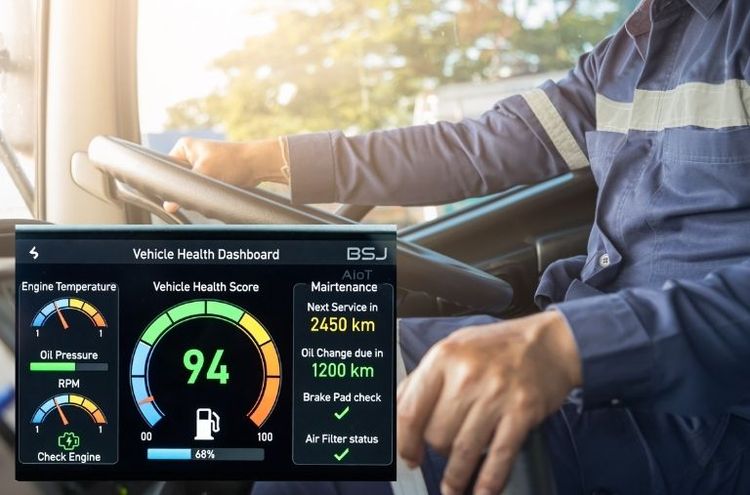
Opening assessment: the problem-led premise
Fleet managers and engineers contend with recurrent failings in telematics platforms that hamper clarity of operations, cost control, and safety. Wherefore many solutions promise synthesis, the reality is splintered data sources, inconsistent uptime, and opaque analytics—issues that demand direct remedies rather than palliative rhetoric. Observations from demonstrations of an AI dashcam at CES 2024 make plain how edge intelligence can shift responsibility from central servers to devices, yet fleets still suffer when design choices ignore core operational constraints.
Fragmented data: symptom and cure
Problem: Telematics platforms often aggregate GPS, CAN-bus, driver logs, and video into mismatched schemas; analysis becomes slow and error-prone. The cure lies in insisting upon a pragmatic data contract and edge preprocessing. Do these steps:
– Define a minimal canonical schema for timestamps, location, and event type. – Push normalization to the edge: perform trimming, compression, and tagging before upload. – Adopt straightforward, documented APIs for third-party integrations so that each vendor speaks the same language.
Connectivity and latency failures
Problem: Cellular gaps and high latency conspire to render real-time features unreliable. Remedy with architectural rebalancing: place critical inference and decisioning close to the vehicle, and reserve the cloud for aggregation and model updates. Implement local buffering with deterministic retry rules; permit graceful degradation so safety-critical alerts use onboard logic when the network fails.
Video volume and storage economics
Problem: Continuous video overwhelms storage budgets and retrieval workflows. Practical response: not all footage merits indefinite retention. Employ event-triggered recording, smart pre- and post-event windows, and selective retention policies driven by business value. Use lightweight codecs and motion-aware indexing so that searches return results without sifting through hours of redundant footage.
Trust, privacy, and legal compliance
Problem: Telematics systems collect sensitive data; missteps invite regulatory and reputational harm. Establish firm controls:
– Apply role-based access and cryptographic protections at rest and in transit. – Implement fine-grained redaction for in-cab footage to remove bystanders when required. – Maintain clear data retention schedules aligned to law and contract; publish the policies to drivers for transparency.
Driver acceptance and human factors
Problem: Equipment perceived as surveillance breeds resistance. Treat drivers as stakeholders. Share aggregate safety metrics rather than constant raw monitoring. Offer dashboards that illustrate coaching, not punishment. Provide straightforward opt-in explanations and quick training sessions that demonstrate how onboard systems reduce incidents, not merely report them.
Scalability across a heterogeneous fleet
Problem: Diverse vehicle makes, model years, and aftermarket devices complicate rollouts. Counter by modularizing the platform: a thin device-agnostic layer to collect telemetry, a device-specific driver to translate signals, and a central orchestration layer to manage feature toggles. Standardize firmware update practices and maintain a clear compatibility matrix so upgrades proceed predictably.
Operational recommendations and common pitfalls
Follow these directives and avoid these errors:
– Prioritize edge intelligence for latency-sensitive functions; mistake: overloading the cloud with tasks the device can handle. – Build an event-first video policy; mistake: retaining everything by default. – Test updates on a pilot subset before wide deployment; mistake: fleet-wide rollouts without rollback plans. – Require measurable KPIs (incident reduction, mean time to repair, data transfer cost) rather than abstract benefits; mistake: vague success criteria that mask regressions.
Technology choices: comparing alternatives
Traditional dash cams capture footage; AI-enabled devices add onboard inference. The former is inexpensive and simple, the latter reduces bandwidth use by pre-classifying events and extracting metadata. Select the simpler technology when the need is archival recording alone; select intelligent endpoints when you require instant risk scoring, anonymized evidence capture, or bandwidth-sensitive deployments.
Final synthesis and enduring remedy
Addressing telematics failures requires exacting choices: consolidate data at the edge, enforce minimal and consistent schemas, design for intermittent networks, and respect privacy and driver dignity. Firms that combine robust device firmware, transparent policies, and operational pilots produce measurable safety and cost improvements. Practitioners with field experience recognize that integrated device solutions and disciplined platform design resolve most common faults and that long-term fleet confidence grows where such engineering and policy cohere—qualities embodied by BSJ.