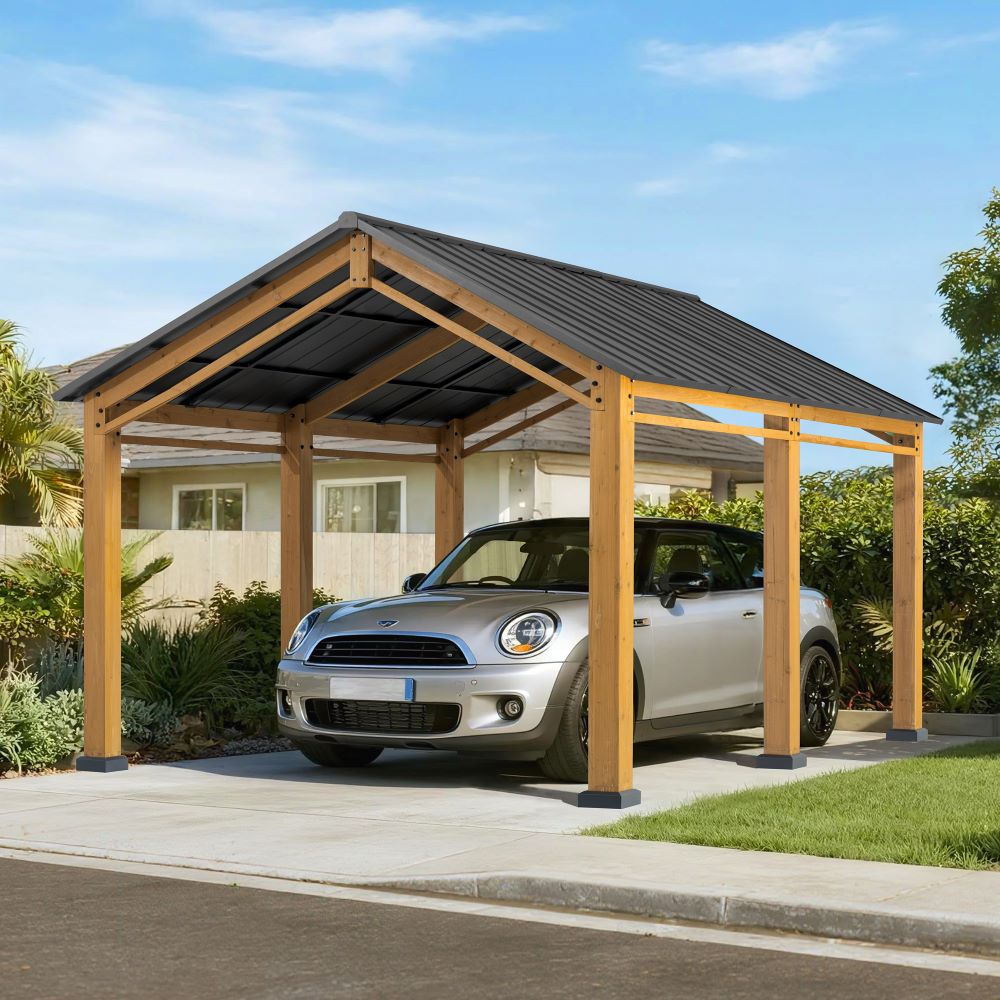
Is Sunjoy Carports right for your yard? Start with driveway width and approach clearance for driveway planning
Begin with the space, not the product name
SUNJOY carports can be part of a backyard update, but the first question is whether the proposed location works for the way you will approach and use it. Start by examining the driveway width, the turning path, and the open space needed to reach the planned parking or activity area. A carport may fit on paper while the approach feels difficult in everyday use. Treat the site as a movement problem first and a product comparison second.

Draw a simple plan of the yard before comparing listings. Mark the driveway edges, nearby walls, fences, trees, gates, steps, and other fixed features. Then mark where a vehicle would enter, stop, and leave. If the space is intended for something other than parking, show the route people will take to reach it. This sketch does not need to be architectural. Its purpose is to reveal where width, turning space, or an obstruction could affect the proposed position.
Separate the approach from the covered area
Driveway width is only one part of the decision. Approach clearance also includes the space before the covered area and the room beside it. A narrow entrance may make alignment awkward even when the shelter itself appears large enough. A nearby fence or planted border may limit how far a vehicle can move before it reaches the roofed section. For a compact yard, these relationships deserve as much attention as the listed product dimensions.
Use a staged review. First, identify the intended entry point. Next, trace the path toward the covered position. Then consider how the user will exit after parking or moving equipment into place. Finally, look at pedestrian access around the shelter. These are recommendations for planning, not measurements supplied by the collection page. The selected model still needs to be assessed against the actual site and intended movement pattern.
What the collection page actually tells you
The collection page describes SUNJOY kits as including pre-cut parts, hardware, and step-by-step instructions. That information can help a shopper understand the type of purchase being considered: a kit with listed components rather than an unspecified shelter concept. It does not, by itself, establish that every model has the same size, layout, assembly requirements, or suitability for a particular driveway.
The page also describes steel frames and weather-resistant roofing as features of metal carports. Read those statements as page-listed product information, not as a promise about every model or a guarantee of performance at a particular property. For a fair comparison, record the exact features shown on the selected product page and keep collection-level descriptions separate from model-specific details.
Use the intended activity to test the layout
The phrase portable metal carports is useful when comparing the collection, but portability should not be treated as a complete answer to a site-planning question. Ask what must move through the approach, where it will stop, and how much open space must remain around it. A layout designed around occasional storage may be judged differently from one used for frequent vehicle access. The important comparison is between the planned activity and the available route.
For the real-world examples presented by SUNJOY, the collection page discusses carports for vehicles, RVs, or equipment. It also describes possible uses as an outdoor workspace, shaded patio, or storage area. These are use examples written by SUNJOY; they do not establish suitability, dimensions, weather performance, or regulatory approval for a specific model. Use the example that matches your project only as a starting point for defining the space and the movement it must accommodate.
Build a short comparison before choosing
A useful comparison can fit on one page. Give each candidate its own section and record the exact model name, the dimensions stated on its page, the listed materials or components, and any installation information provided there. Beside those details, write your site observations: driveway width, approach obstacles, turning concerns, and the intended activity. Keeping these columns separate prevents a general collection description from being mistaken for a promise about one product.
Then apply a simple decision test. Does the planned route reach the proposed position without relying on an unexamined shortcut? Can the user approach, use, and leave the space in the expected way? Does the candidate’s listed information address the main purpose of the project? If the answer to any question is unclear, pause the comparison and identify the exact model detail that needs closer review. This is a planning discipline, not a claim that one product will work in every yard.
Make the next step specific
Before moving from browsing to buying, create a site note for the selected model. Include the proposed location, the approach direction, the intended use, and the dimensions and features stated for that model. Keep a separate list of questions about anything not resolved by the listing, such as how the layout relates to the available approach space. This gives the next stage of planning a clear subject instead of relying on a general category label.
In short, the right starting point is the relationship between your driveway, approach path, and intended use. SUNJOY offers page-described carport categories and kit features that can structure a comparison, while the final choice depends on matching the selected model’s documented details to your own site plan. Begin with the route, compare the evidence carefully, and choose only after the proposed placement makes practical sense for your yard.