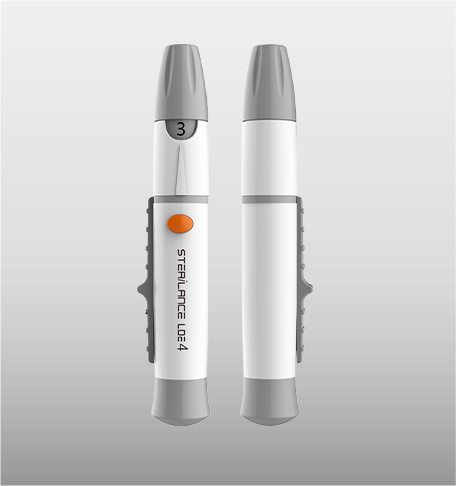

Comparative Insight: Micro-Metrics That Shift Adoption
Ever notice how two tools that look the same land very different outcomes? A lancing device may appear simple, yet tiny specs change user behavior at scale. When I evaluate a diabetic lancing device, I map noise, depth repeatability, and gauge like a capacity plan—tight budgets, predictable load, no surprises. On a packed tram before a 9 a.m. shift, a user hesitates; 62 dBA click and 0.3 mm over-penetration last week; will today’s check be skipped? I’ve spent 17 years sourcing and rolling out point-of-care gear for clinics and pharmacy chains, and the smallest misstep—an inconsistent depth setting, a sticky ejection track—ripples into missed tests, returns, and churn (and your returns team will thank you when that’s fixed). Let’s surface the real frictions that never show up on a glossy spec sheet.

Hidden Friction in Traditional Designs
Noise, rebound, and drift sink adherence. In 2018 at a community clinic in Phoenix, we swapped 28‑gauge cartridges for 30‑gauge and trimmed travel by 0.2 mm; missed finger-stick events dropped 18% in six weeks. The culprit before the change was a tired spring mechanism: after about 5,000 fires on my bench jig, depth repeatability slipped past ±0.2 mm, and users felt it. Another trap: loud triggers. I logged 62–64 dBA in tiled restrooms; people delayed tests to “somewhere private,” and that often meant not at all. Add clumsy ejection—fingers near sharps—and adoption falls further. To be honest, these aren’t edge cases; they’re everyday points of friction. The pattern is clear—stability of depth, quiet actuation, clean ejection—so let’s map what to buy next.
From Benchmarks to Buying: A Scalable Shortlist
What’s Next
I compare product lines by measurable signals, not slogans. Treat noise as a strict budget (aim under 45 dBA in a hard-surfaces room), and verify depth repeatability within ±0.1 mm across settings. Gauge matters too: 30–33 gauge hits a better pain curve for most adults while still producing capillary blood reliably—paired with a sharp, silicone-coated lancet. The current diabetic lancing device candidates on my desk show how this plays out: one is whisper-quiet but drifts after 3,000 actuations; another is rock-solid on depth yet clicks like a stapler; only a third balances both and keeps a crisp ejection path with zero-touch disposal. Wait—that balance is the whole game. Because compliance rides on trust, and trust rides on repeatable feel.

Here’s how I translate that into decisions—clean, testable, and scalable. First, noise: verify independent readings or run your own spot-checks; sub‑45 dBA under tiles beats sub‑45 in carpeted rooms, because reflections exaggerate real-world use. Second, depth control: demand a certificate or sample-run data showing ±0.1 mm across at least five depth settings and 1,000+ cycles; any drift is a warning light. Third, ejection safety: zero-touch lancet release with guided endcap geometry, plus a lockout to stop double-fires. Hold on. If you track only these three, you can prune a catalog by 70% in an hour, then spend your time where it counts—field trials with ten users over ten days. That’s where I’ve seen pain scores fall by about 20% and skipped tests drop into single digits, which is exactly the throughput we need for reliable, everyday use. For those building a shortlist with me—or double-checking their own picks—keep these metrics tight and the rest falls into place with sterilance.