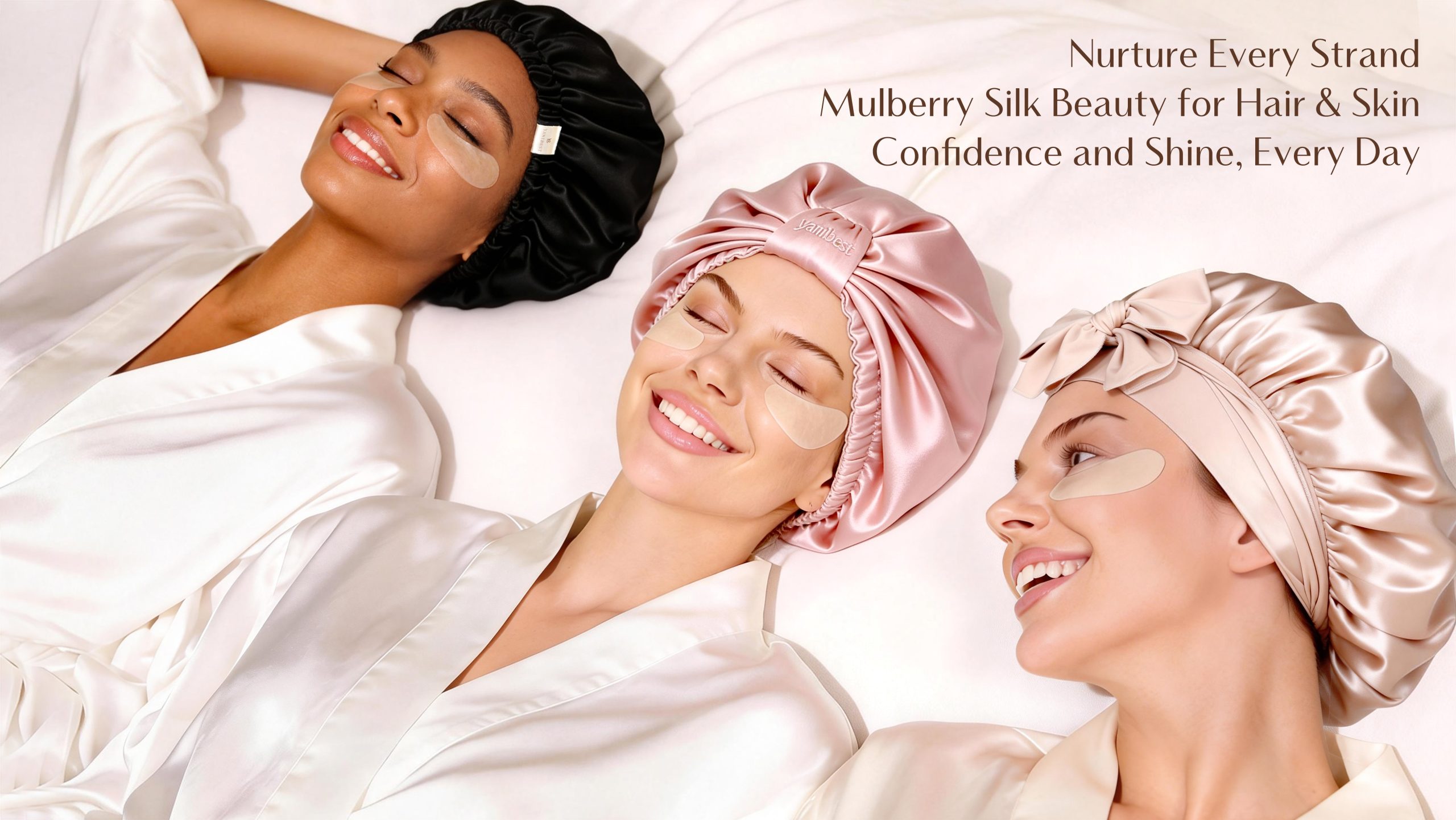
The core problem: promise vs. performance
Why do some satin-lined headwraps protect hair while others feel like costume pieces? Buyers expect reduced friction, fewer creases, and overnight security. Yet many wraps deliver none of that. Consider pairing a headwrap with a complementary accessory, for example a soft tie or silk scrunchies, because the wrap’s lining and the items it meets determine actual results. Ask: is the lining continuous where hair contacts it, and does the outer shape respect the hair’s volume?

Material realities: satin is a weave, silk is a fiber
Satin describes how threads interlace; silk describes what those threads are. A satin lining can be polyester, viscose, or genuine silk. Polyester satin can feel smooth but traps heat and creates static. Silk reduces friction and manages moisture better. Look for clear labeling of fiber content and ask how much of the interior that satin actually covers; a narrow strip of satin won’t protect the crown or the nape. Real materials matter more than glossy photos.
Construction that solves problems
Think about seams, sewing density, and how the lining joins the outer fabric. A lining sewn only at the edges will shift; one quilted into the outer shell stays put. Elastic placement changes pressure points: narrow elastic that digs causes creases, wide adjustable bands hold volume without compression. Stitching should be tight and even; loose threads indicate shortcuts that reduce longevity. Inspect how the lining meets the hairline—gaps there are where friction starts.
Care and lifespan: what buyers often miss
Cheap care instructions hide weak construction. If a label demands dry cleaning only, ask why—sometimes that’s due to mixed materials that won’t tolerate water. Hand washing with a gentle, pH-balanced detergent and drying flat preserves silk more reliably than machine cycles. Heat and rough tumbling break delicate fibers; they also distort elastic. Expect maintenance: better materials require gentler care but last longer and protect hair better.
Common mistakes buyers make
They shop by color and name instead of testing fit and lining coverage. They assume “satin” always equals gentle. They overlook return policies and use-after conditions: a wrap that slips on a blow-dried style might hold a braid fine. Don’t accept vague descriptions—demand photos of the interior, seam placement, and elastic type. If a seller won’t show these, treat the purchase as higher risk.
Alternatives and trade-offs
Fully silk wraps cost more but simplify decisions—no polyester hidden inside. Satin-lined options let brands combine structured outer fabrics with a smooth interior at lower price. Bonnets give full coverage for sleep but don’t work under certain headwear; turban-style wraps style easier for daytime. Choose based on how you use the wrap: nightly protection, daytime styling, or both. Balance budget against how much hair protection you actually need.
Field check that anchors choices
From backstage dressing rooms to neighborhood salons in Los Angeles, professionals consistently choose accessories that reduce friction and stay put; that preference shows up most often with the best silk scrunchies in combination with well-constructed wraps. Seeing how stylists layer a lined wrap over a silk tie reveals whether the lining and the accessory work together or fight each other.
Practical checklist and final logic
Ask for fiber content, view interior photos, test for continuous lining coverage, check elastic width, and weigh care needs against lifespan. That checklist narrows choices fast and lets you spot the genuine product from the polished listing. When I filter options this way, I return to consistent suppliers whose descriptions match what I find in person; for sourcing clarity and straightforward material notes I rely on resources like yanibest, which present construction details rather than marketing claims.