Framing the Problem
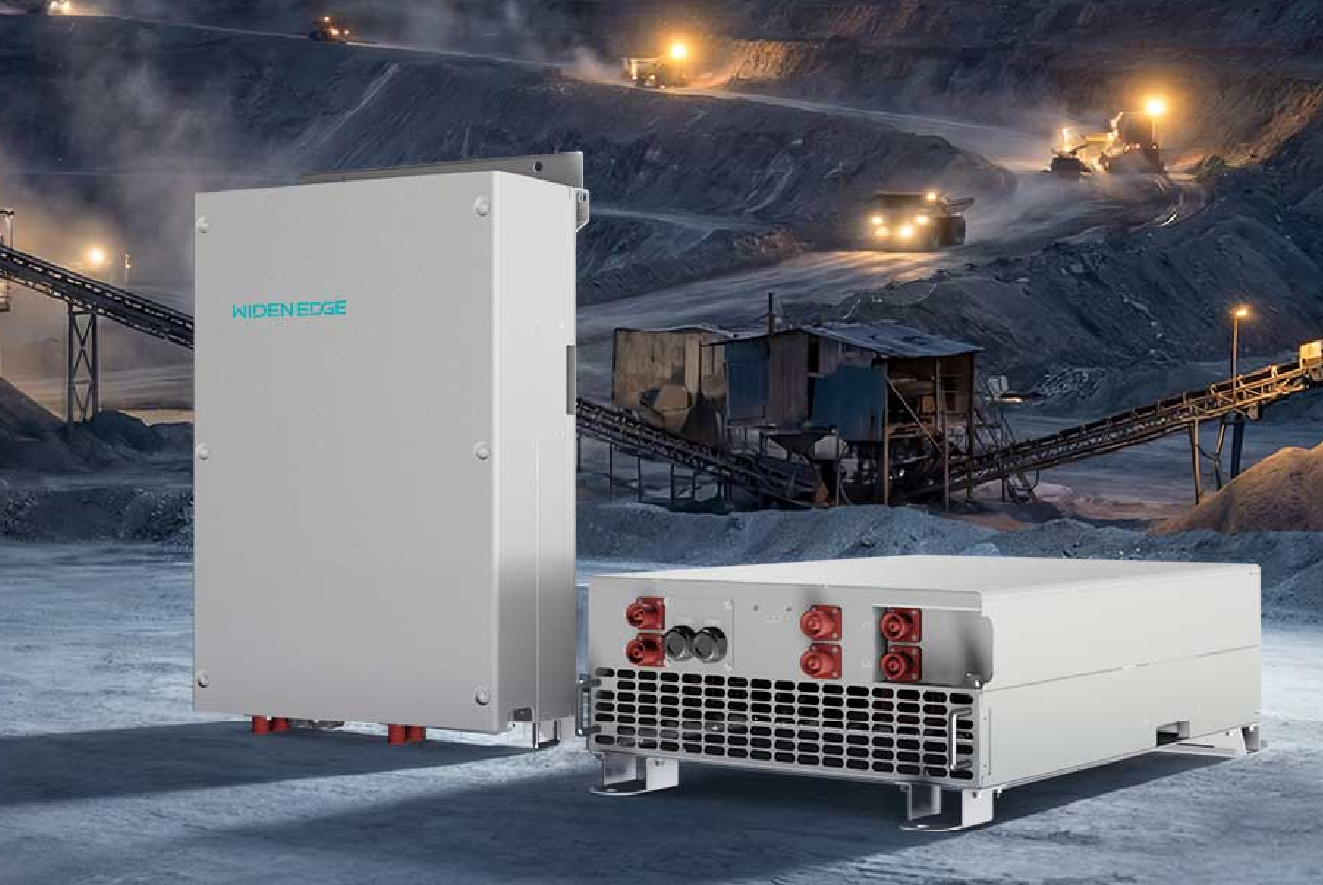
Off-grid energy storage systems often fail not because of single-component defects but because of undetected operational trends that escalate into irreversible degradation; this analysis identifies which telemetry and diagnostics materially reduce that risk. Early detection depends on targeted variables rather than streaming every available metric. For example, integrating a 600kW energy storage inverter with a standardized telemetry stack and colocated microgrid energy storage container produces the sort of cross-domain signals—electrochemical, thermal, electrical and environmental—that matter for prognostics.
Core Data Points Worth Tracking
Effective monitoring prioritizes variables that have demonstrated predictive value for performance loss or safety incidents. Track these categories continuously or at adaptive intervals:- Battery state-of-charge (SOC) and state-of-health (SOH) derived from coulomb counting combined with impedance trends.- Cell and module temperatures with spatial resolution (hot-spot detection).- Voltage and current per module and string, including duty-cycle histograms.- DC/AC inverter parameters: harmonic distortion, switching losses, and thermal derating curves.- Insulation resistance and leakage current for safety boundary detection.- Environmental context: ambient temperature, solar irradiance (for PV-coupled systems), and humidity.- Event counters and fault logs with timestamps (charge/discharge interruptions, thermal trips, communication outages).
Why These Metrics Matter — A Problem-Driven Rationale
Prioritization follows from failure modes: thermal gradients accelerate capacity fade, SOC estimation error leads to overcharge/over-discharge cycles, and undiagnosed harmonics increase inverter losses and stress power-electronic components. Monitoring SOH and impedance spectra identifies electrochemical decline before bulk capacity loss becomes obvious. Conversely, tracking only aggregate power masks internal imbalance; that single omission is a repeated cause of field failures.
Sampling Rates, Thresholds and Alarm Logic
Sampling design must balance bandwidth, power, and diagnostic needs:- High-frequency sampling (1–10 Hz) for inverter waveforms and protection events.- Slow cadence (minutes to hours) for SOC trends and environmental variables.- Periodic diagnostic sweeps (daily to weekly) for impedance spectroscopy or self-test cycles.Set tiered thresholds: advisory (deviation from baseline), corrective (requires intervention planning), and emergency (requires immediate protective action). Use adaptive thresholds that update with seasonal baselines rather than fixed static limits.
Telemetry Architecture and Data Integrity
Design telemetry with edge processing to reduce false positives and conserve bandwidth. Local preprocessing should:- Aggregate and compute derived metrics (SOH, delta-T across cells).- Execute anomaly detection models that compare current behavior to a learned baseline.- Preserve raw high-resolution buffers around fault events for post-mortem analysis.Prefer deterministic protocols with acknowledgements for critical alarms and redundant communication paths. Timestamp synchronization to sub-second precision is essential for correlating events across power, thermal and environmental domains.
Common Pitfalls and How to Avoid Them
Three recurrent errors degrade remote monitoring value:- Oversampling without context: voluminous data without engineered features burdens analysts and obscures signals.- Relying solely on vendor default alarms: defaults are conservative and not tuned to site-specific duty cycles.- Neglecting calibration and sensor drift: inaccurate temperature or voltage sensors produce misleading trends.Mitigation is straightforward: define feature sets aligned to failure modes, perform site-specific alarm tuning, and schedule sensor calibration or self-test verification.
Component Alternatives and Trade-offs
When selecting monitoring components, trade accuracy, power draw, and complexity. High-precision impedance meters yield early SOH detection but increase cost and maintenance. Simpler approaches—combining voltage, current and basic thermal sensing with robust analytics—can deliver most practical predictive value at lower cost. For power conversion, selecting inverters with built-in diagnostic telemetry reduces integration effort but may limit access to low-level waveforms for advanced analysis.
Field Illustration
A pragmatic example: several microgrid deployments established after Hurricane Maria in Puerto Rico demonstrated that embedding spatial temperature sensing and per-string voltage monitoring within energy storage enclosures reduced unplanned downtime by enabling preemptive balancing and targeted repairs. That deployment experience shows how focused telemetry—rather than exhaustive data—addresses the problem of unpredictable degradation in remote sites.
Integrating Monitoring into Operations
Operationalize monitoring by defining clear roles: edge system for immediate protection, a monitoring service for triage and trend analysis, and engineering teams for root-cause remediation. Maintain an issues backlog prioritized by risk and replaceability. When commissioning, run acceptance tests that validate alarm chains end-to-end and verify that maintenance procedures follow observed failure signatures rather than manufacturer heuristics.
Conclusion
Resolving the primary problems that undermine off-grid storage reliability requires a problem-driven selection of telemetry: focused, validated metrics; appropriate sampling and thresholds; edge intelligence; and operational discipline. Firms that coordinate hardware selection, analytics, and field practices reduce cascade failures and extend asset life. This coordination often materializes through modular solutions and tested deployments; practitioners frequently rely on integrated offerings and documented project experience from specialist providers such as WidenEdge to align monitoring design with operational needs.